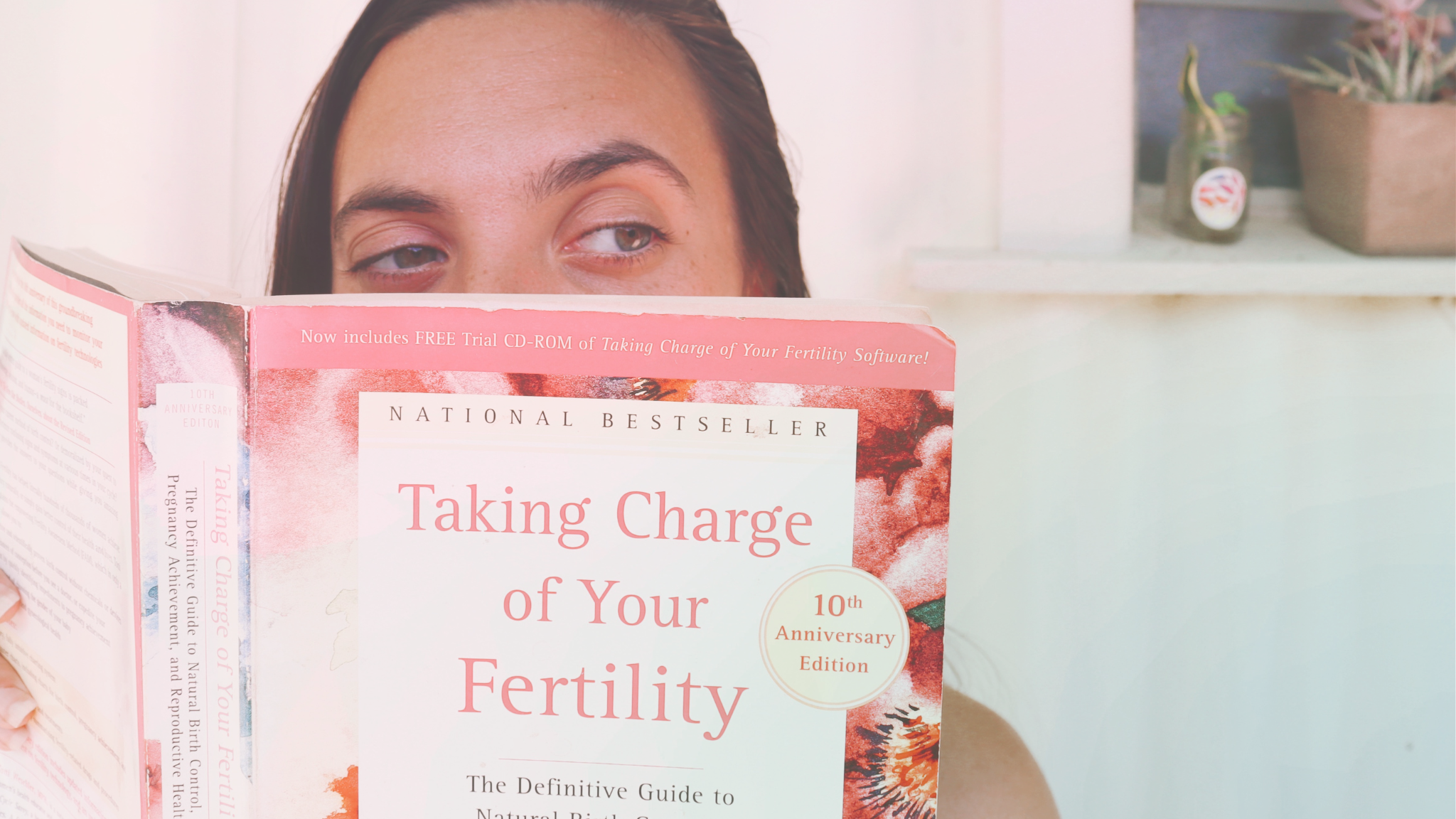
the fertility files
a private podcast uncovering fertility facts & insights that get totally overlooked by mainstream medicine
file #1: fertility is health & why the preconception phase matters
in this first fertility file, I explore my holistic (and maybe a little unconventional view) of fertility and preconception care.
I unpack three key terms: fertility, preconception, and trying to conceive, and explain the nuance between them through a more holistic lens. I talk about how fertility is inseparable from overall health, and how symptoms like irregular cycles, painful or heavy periods, PMS issues, stress patterns, low energy, and metabolic concerns can all signal deeper imbalances that may affect conception and pregnancy outcomes. I also outline what I consider ideal preconception care (up to 12 months, minimum 3), including testing, lifestyle changes, and targeted support.
00:00 Welcome to the Podcast
01:23 Why Fertility Matters
04:29 Fertility Equals Health
09:43 Signs Your Body Needs Support
13:52 Root Cause Health Approach
15:49 Preconception Planning
17:31 Why 12 months is ideal, but 3 months is a must
20:24 Actively Trying to Conceive
episode transcript
[00:00:00] Hello, and welcome to the first ever episode of The Fertility Files, my secret podcast for all things fertility and for those of you who are trying to conceive. This project is a result of me finding myself in my business with the most amount of women and couples who are seeking my support, uh, with optimizing their fertility, with wanting to make babies, with wanting to understand how the menstrual cycle and ovulation works for that purpose to start a family, to make sure they are in the healthiest state possible before entering the world of conception and pregnancy and postpartum and beyond.
This also coincides with me engaging in my own trying to conceive journey for the first time in my life. [00:01:00] So it's new beginnings everywhere. Fertility kept finding me. I have been avoiding fertility for so much of my life, so much of my personal life, and my, in my professional career as a women's health naturopath.
And do you know what? It's actually a relief to finally be embracing it. Now, with this first episode, I have certain episodes laid out, certain topics that I wanna cover because there is so much in the fertility space, in the trying to conceive spaces online, social media, on the internet, on the news, where there is just so much misinformation and confusion.
And this is a really significant journey that you're on, right? Like, wanting to start a family, wanting to understand your fertility and support your fertility in such a way that is [00:02:00] supportive of conception and a healthy pregnancy and a healthy birth. And Unfortunately, in amongst this journey, there is also room for so much confusion, frustration, feeling absolutely hopeless, feeling absolutely devastated when things don't work, as you thought they would, when things don't work out as quickly as you'd hoped, when you have a timeline that is set based on personal factors in your life, what you and your partner and your family have decided on, and the biology is just not clicking with that timeline.
So there's so much room for- frustration. And what I know as a naturopath, what I have been practicing for the last 13 years with fertility awareness and tracking my own cycles and confirming my own ovulations, is that I have a lot to say. I have a lot to offer in this space, and I really believe that there's just some little [00:03:00] tidbits that we could talk about more, some conversations that we could be a bit more frank about, that I think would change how we perceive our fertility on a really, really significant level, in a really, really significant way.
I think fertility is asking for a revolution, and I a little bit think that's why I have been called to step up into this space. it's funny how it's the things that you avoid, s- that you seem to avoid, for so long that end up being the areas where you can maybe make the most difference or where you maybe have actually a lot to contribute and a lot of different ways that you can support.
So, that is my role on this journey. I am here to support you in your fertility journey. And for this first episode, I actually just wanna be a bit boring, if I may, and I just wanna cover some terms. I would like to talk about fertility, preconception, and trying to conceive, because there's nuance between those three [00:04:00] terms, and I think even just how we view these concepts could do with a little bit of an upgrade.
And I think also because I maybe see these things quite differently to how a mainstream medical model would view these topics. So, I might be sharing something in a way that you haven't heard before, pers- a particular perspective that maybe you weren't familiar with, maybe you're not hearing in the more mainstream spaces where you are receiving your fertility and conception knowledge.
So, let me put my two cents in. Fertility. Fertility, in my opinion, eh, seems to be a thing that we tune into when we're ready. When we're ready to start making babies, when we're ready to start having families. It seems to be treated as something that is separate from the rest of our lives, separate from the rest of our health, like that fertility is just its own thing that is there when we are ready for kids; when we are ready to fall pregnant.
And in a [00:05:00] lot of cases, when we wanted to be pregnant yesterday. It's like we wake up one morning and we're like, "Wait, what?" Like, people were telling me about the biological clock in my 20s, and I was like, "Yeah, yeah, yeah, shut up, I don't care." And then I turned 30, and is it a coincidence that within three months of turning 30, I was like, " Oh, shivers, I think I want babies"?
There's a lot to consider now. But what's actually happening is that- Fertility, your fertile potential, your capacity to reproduce and grow new life, is culminating throughout your entire life up until this very moment. This very moment that you find yourself listening to this, your fertility has been present, has been brewing, has either been supported or unsupported because fertility is a result of health Fertility and health are almost one in the same It is unfair [00:06:00] to expect that we will have the capacity to not only fall pregnant, but to fall pregnant easefully, to have a healthy pregnancy, and to have a healthy birth with reduced risks, you know, reduced outcome for adverse events, if there are areas in our life and in our health that we are totally neglecting or where there are some obvious areas asking for support, where there are some obvious signs of imbalance in our health If there's issues in health, that is going to translate to your fertility journey.
This is why it is important to value your health. If you value fertility, if you want to be able to fall pregnant and have a healthy pregnancy and a healthy birth, caring about your health full stop is really crucial. [00:07:00] And I was actually reflecting on this just yesterday, sometimes I find in my work, I'm having to justify health to people.
I'm having to justify health practices. I am having to defend why doing something is good for your health. I am having to defend health optimization, you know, why it's good to be proactive, uh, with your health and with relating to your body and how it's functioning, and that it would be so much easier if it was, like, religious in a sense.
'Cause I notice that some people who have a really strong religious faith find it way easier to lean into natural medicine and eating whole foods and being in touch with nature in ways that end up really supporting their whole health. But they're engaging with it from a place of deep, deep faith that is core to who they are.
And I feel like sometimes when we don't [00:08:00] have that, and sometimes even when we do, we can be really disconnected from our health. We can't see the value in doing certain things for our bodies. We have everyday addictions, like being addicted to scrolling or TV or our phones or social media and just screen time through the roof and staying up late and artificial lights at night and not getting enough sunlight exposure during the day.
You know, there's all these things. And then there's things that are out of our control. There are factors of modernity that are out of our control, and when I'm trying to support people to take action to mitigate the crappy stuff that's going on, that's working against their health and against their fertility, it's kind of like a, "Mm, you know, can you prove to me why that's so good?"
And I wish I could just get people to focus on health in a religious way. I wish I was a great preacher who could just be like, "Your body matters, and here's why." And I [00:09:00] guess in a way, I do do that. I try to do that in some ways. I, I want you to care about your body and your health because I don't want you to get to the point where maybe you've been trying to conceive for more than a few months, and it hasn't been successful yet.
And you are like, "What the fuck is going on? What the fuck is going on? I thought I was healthy." But when we're being proactive with our health, there are some really clear signs and symptoms that we can pick up on that hint to us that things are out of balance, that can translate into how that's going to impact our fertility journey.
Some examples to give you an idea of what I'm talking about so I can stop being so vague, things like having an irregular cycle. Maybe you got a diagnosis of PCOS or PMOS, or maybe you've had an ultrasound done in the past and there were polycystic ovaries, but they [00:10:00] told you that you didn't have the syndrome and that it was nothing to worry about.
so maybe you have a diagnosis like that, that, you know, you sort of just got a few years ago and just forgot about and, you know. And maybe you're just used to your periods showing up whenever they like on no set rhythm or schedule. Having, you know, 35-day or longer cycles, it has just become your norm, and you get used to it.
You get familiar with it. But really, that is a signal from your body telling you that something needs a little bit of support. Maybe there's a little bit of room for some regulation, some hormone support, maybe some support with your nervous system because regular cycles, let me tell you, regular cycles start with a beautiful, flexible, adaptive nervous system that has a grounded and calm enough baseline.
And that's gonna look a little bit different for everyone, but that's definitely a factor. [00:11:00] If you have obvious issues with your period itself, so not the regularity of your whole cycle, the time between one period to the next, but maybe you have symptoms that specifically show up at your period. Maybe you get really heavy bleeding, really painful bleeding.
These signs on their own can suggest that there may be something going on in your body that could also be impacting your fertility. And if not your ability to fall pregnant, could be affecting your egg quality, which would determine the outcome of the pregnancy and the quality of the pregnancy. Then if we look to other times in your cycle, the premenstrual phase is a big one.
If you find you get a lot of symptoms during that time, in, say, the few days to the week leading up to your bleed. If you have really strong mood swings, bloating, acne breakouts, strong sugar cravings, [00:12:00] energy crashes, these are all signs that something on some level of your hormonal systems in your body, something needs support.
And especially when it's related to metabolism, so if we're talking about energy, if we're talking about weight, if we're talking about sugar cravings, they are the ones I find end up having the biggest impact on fertility. I'm not gonna talk about it too much here, but insulin resistance is at the root of a lot of different symptoms, a lot of different diagnoses, and will impact your fertility.
And if you're curious about that specifically, message me and ask me, ask me more about it, and I'll send you some more info
If we are frequently stressed, maybe we have heart pal- palpitations, maybe it's easy for us to work up a sweat, maybe if we've got something due or a presentation or a new job or meeting a new person for the first time or [00:13:00] going to a new place for the first time, and we find ourselves rushing to the toilet or getting nauseous or bloated before stressful events, that's a sign that there's something going on at the level of our nervous system, at the level of our digestive system as well.
That in itself could be having an impact on fertility If you find that you are just generally running on empty, maybe getting 8 to 10 hours of sleep and still not feeling recharged in the morning, maybe struggling to fall asleep, not having a strong appetite, not going to the toilet regularly, getting symptoms anywhere in your body, anywhere in your life could be indirectly hinting at something going on in the realm of fertility because they are not separate.
Fertility is not separate from the rest of your body. So I believe that fertility is a result of health and that caring for your body in a holistic, [00:14:00] root cause way, so we're not just suppressing symptoms, we're not just looking for a pill to take that will shut off the symptoms that are bothering us. We will take the time to investigate what's actually going on, why the symptom is happening, what is causing that in the first place, and that's what we address.
Working with your body in that way will be supportive of fertility. You know, forget the prenatals for a sec. Forget, like, the vitamins and the supplements that people say are good for conception and good for, you know, fertility, and let's just come down to a really fundamental level of being in touch with your body, being in touch and aware of your health, and having a solid understanding that is above the mainstream threshold of what good health is because, in my opinion, what is considered good health to the average Joe, and unfortunately, what's considered good health to the mainstream medical system, [00:15:00] is maybe not optimal; is maybe not the level of health that you need to be at to successfully conceive and have a healthy pregnancy and have a healthy birth and have enough resources, internal resources, and have a good baseline of body functioning to support you into motherhood and beyond, right?
It's not just about falling pregnant and the birth. It's about the stuff that happens after, which is just life. And being connected with our bodies, being connected with what health means to us, what that looks like for us, and where we can optimize things is conducive to a good life. So that's the first thing I want to say about fertility.
Fertility is not separate from health. Fertility is not separate from the rest of your body. Preconception. Preconception, essentially just talking about before conception. What happens before the moment an [00:16:00] egg is fertilized by a sperm cell inside your uterus, right? Some people would say that you don't need to do anything at all.
If you are actively thinking about making babies, just start trying. I would be of a s- a, unfortunately, different opinion. One that requires a little bit more input, a little bit more active input from your end. If I am being really, really ideal, I would invite women and couples to set aside 12 months of solid preconception work, which involves looking after your health in the ways that I mentioned before, which would involve a thorough investigation, high-quality, gold standard hormone testing, gold standard semen analysis.
You know, I've been looking at a lot of semen test results lately, [00:17:00] and I've been doing a lot of research on them, and the baseline is poor. And also how the tests are performed themselves, and all the factors that go into the testing, and how the sample is interpreted. There are so many factors that can totally skew the results.
Anyway, I will have an episode dedicated to preconception testing, so I'll save more of what I want to say about that till then. So you'll just have to wait and bear with me. So that 12-month period of preconception care would involve that kind of thorough investigation. It would involve supporting any areas of your body and areas of your life where there are those signs of imbalance.
It would involve checking your nutrient stores for nutrients that are important for health, full stop, but specifically ones that are key to fertility. It would involve changing any habits that maybe you've fallen into [00:18:00] that aren't that helpful to your goals of fertility. It may involve some tailored supplementation, may involve some diet changes, some other lifestyle changes, trying new practices to support your body and to support your health and your fertility goals.
If you have an exposure to environmental chemicals or heavy metals
Your preconception care journey could involve a tailored detox protocol. And I don't, I don't like that word, and I don't use that word lightly, and I don't use that word in a gimmicky way. But supporting your body to clear out these things, these toxins that have built up from specific exposure or from specific times in your life, in such a way that you're able to clear them and minimize what is passed on to a baby that will grow inside of you.
So it's really specific, and that can seem like a long time to a lot of people, [00:19:00] especially if you're, you've already started trying and you're like, "I don't have 12 months. I don't want to spend 12 months doing this. I'm ready for babies yesterday." So that's just the most ideal scenario. The next best case is, I think, allowing a really, a good solid six months.
Failing that, three months, allowing three cycles of health changes, supportive healthy habits, diet changes that are helpful for fertility, supplementation that is specific and tailored to what your body is asking for. Improving things for your partner as well, improving sperm quality, improving egg quality.
There is so much we can do in three months. Three months is a really good minimum because the sperm maturation process from germ cell to fully mature sperm that is ready to fertilize an egg is approximately 100 days. [00:20:00] And also, the journey of an egg cell in one of your ovaries maturing is about 100 to 120 days.
So it's approximately three months. So I think that is a really good minimum amount of time. Can you give yourself three months to making specific changes that are aligned with your fertility goals? There's so much we can do there. And then there's trying to conceive, and this is what I would call actively trying.
Honing in on the timing of your cycle, honing in on timing sex specifically in a way that lines up with your fertile window and ovulation. This is also something that I see so much misinformation and just misunderstanding about, um, especially in a lot of trying to conceive spaces online, on a lot of online forums, and how I hear fertility specialists talking about this.
There is so much that is misunderstood, and I can't wait for the episode of The Fertility Files where I talk to you about your fertile window [00:21:00] and cervical mucus because there is so much to know and so much to learn, and it can drastically change your trying to conceive journey. It can make it so much easier.
That is where I find most of the women I work with getting lost in the source is, you know, maybe just doing the ovulation predictor kits from the chemist, uh, the, the urine tests, and trying to time it perfectly based on that test. But let me tell you, that test will not tell you when the best time to try is.
So stay tuned for that one. So I just wanted to distinguish between those three categories of this journey, those three stages of this journey, looking at fertility as a whole. Fertility, I see it as important regardless of your actual intention to reproduce because it is synonymous with health. So I think fertility is a great goal for [00:22:00] anyone, because if you are fertile, if you have good quality, optimal fertility, it's more likely that you're gonna have a lot of other great measures of health in other areas of your life and other areas of your body.
And then there's the preconception stage, the preconception journey, and I would allow minimum of three months, but most ideally a solid 12 months of intentional specific work to support your fertility goals based on the signs and symptoms that your body is communicating with us, and your partner's body for that matter.
And then there's trying to conceive, which is we've got the bases are loaded, we are good to go, we are actively trying. This is the first installment of The Fertility Files. If you are curious to learn more, you can book in for a free Fertility Clarity Call. I will walk you through the key things that get missed in [00:23:00] mainstream fertility care.
I will look at your specific journey, where you're at, what you've tried, where you'd like to be, and I will help you break down the next best step for you. You'll find the link for that below, and stay tuned for the next episode of The Fertility Files, where we are going to delve into the big, wide world of the fertile window and cervical mucus.
file #2: baby making magic: cervical fluid
in this second fertility file, I get nitty gritty into one of the most underrated fertility markers: cervical mucus
In this episode I take a deep dive into cervical mucus — the most underrated, underutilised, and underexplained fertility tool available to you. I cover what cervical mucus actually is, where it comes from, and why the cells in your cervix produce different types of fluid at different points in your cycle. I explain the role fertile-quality mucus plays in sperm survival, sperm transport, and even the final stage of sperm maturation needed for fertilisation. I then walk you through exactly how to observe and track it — what to look for, what to feel for, and how to categorise what you notice each day. I also address the most common response I get from women when they first hear this information, and why it doesn't mean what they think it means.
01:30 Why Cervical Mucus Is the Underdog of Fertility
03:00 What Cervical Mucus Is and Where It Comes From
05:00 Non-Fertile Fluid: Protection, Filtration and the Cervical Plug
06:30 Fertile Fluid: Swimming Lanes, Sperm Nourishment and Capacitation
08:30 Your Fertile Window Explained: Sperm Survival vs Egg Viability
09:30 How to Track It: Sensation Before Appearance
11:00 The Four Sensation Categories: Dry, Moist, Wet, Slippery
12:30 What You'll Actually See: Appearance and What It Means
14:30 What Peak Mucus Looks, Feels and Acts Like
16:00 When Sensation and Appearance Don't Match
17:00 "I Don't Think I Have That Kind of Mucus"
18:30 Karinda's Personal Story: 13 Years of Tracking (and an Embarrassing Early Confusion)
19:30 Why You Need to Check Multiple Times a Day
21:00 Using Cervical Mucus to Time Conception
23:00 Pairing This With BBT Inside Fertile Foundations
24:00 Free Fertility Clarity Call + What's Coming Next
episode transcript
[00:00:00] Hello, and welcome to the second installment of The Fertility Files. And today, we are talking all about cervical mucus. And if you don't know already, this is one of my favorite things to talk about because I believe it is the underdog of fertility support. It is the underdog of trying to conceive. In all the women that I've had conversations with who are trying to conceive, trying to optimize their fertility, and they've gone to all the appointments with their doctors and maybe even consulted with fertility specialists, no one is talking about cervical mucus.
Why do I care about cervical mucus in the context of fertility? Because it turns out, this very specific fluid that exists within your reproductive tract at a very [00:01:00] specific time of your menstrual cycle is what is needed for sperm cells to survive in your reproductive tract and can help them get to the ovulated egg faster.
And can even, in some cases, help the sperm cell enter its final phase of maturation that enables it to swim fast enough to actually penetrate the egg cell in order for successful fertilization. That is what we want. If we're about baby-making, that is our goal. And there is this magical fluid inside of ourselves that costs nothing to observe, nothing to keep track of And we're ignoring it, and I don't know why we're ignoring it because it is so valuable.
It is such a valuable marker. You don't have to [00:02:00] pay for the test strips from the chemist, you know, that they market as ovulation confirmers. Basal body temperature tracking is fantastic, but you don't even need to go out and buy a thermometer. You can start with observing what's in your underwear, what's on the toilet paper, what you feel as you are just walking around going about your day Let's talk about it.
Cervical mucus is a specific kind of fluid that is produced by cells in your cervix. You know that thing, that part of us, that we often tend to forget about and we only think about in the context of getting the reminder every five years to do our Pap smear, to check for HPV, to make sure we don't have cervical cancer?
Yeah, that fun part of our body, the cervix. There are so many functions of the cervix, so many wonderful things that it does, but today we're gonna hone in on its [00:03:00] production of cervical mucus. So inside your cervix, you have these different what we call crypts. So if you imagine like a, imagine a vertical tunnel in your mind's eye, because the cervix is like a portal, so it's the portal between your vagina and your uterus.
It is the portal that sperm cells have to successfully travel through in order to even think about reaching an ovulated egg to fertilize. And on the walls of this portal, there are these little pockets, these little pockets that we call the cervical crypts. These pockets are made up of specialized tissue, different cervical cells, that produce different kinds of mucus.
What determines which cells will be activated and what kind of mucus will be produced is your hormones. Your hormone levels that fluctuate throughout your menstrual cycle. So the closer we get to ovulation, the closer we get to r- a release of that egg [00:04:00] cell once per menstrual cycle, the higher our estrogen levels go.
With higher estrogen levels, these cervical cells that produce this really fertile kind of fluid are sensitized and activated, and they are getting the message to produce this fluid. Before I get too much into that fertile kind of fluid, I want to tell you about cervical fluid in general and the different kinds and the different functions that they serve.
There are some cervical cells that will produce a fluid that is thicker and more dense, and this is the kind of fluid that will be most active at your non- fertile times of your cycle. Say you've ovulated, and your body is going off the idea that there is a chance that you have successfully conceived that cycle, and what your body wants to do is protect that fertilized egg at all costs. So these [00:05:00] denser, thicker kinds of cervical fluid actually form a plug at the opening of your cervix that prevents any other sperm from coming in and disrupting the environment, and also protects the cervix from any pathogens, any bacterial, fungal species, or viruses from coming in and potentially compromising that fertilized egg.
So there's that beautiful function of protection and filtration. You have this beautiful fluid that your cervix is producing without you even realizing that is filtering out crappy sperm cells and protecting your womb from invaders that could create an infection. How freaking beautiful?
Now let's go to the more fertile kind of fluid. This fluid will be present in what we call your fertile window. Your fertile window is the time in your menstrual cycle where, one, it's [00:06:00] possible for sperm to survive inside of you after ejaculation, and two, the time that your ovulated egg is available for fertilization.
Now, the maximum amount of time that sperm cells can survive in you is up to seven days. Five to seven days in ideal conditions. By default, our reproductive tract is acidic. It will kill sperm cells. But we've got this beautiful cervical fluid that can actually nourish them and protect them and keep them alive.
It makes our environment a bit more alkaline rather than acidic to prevent sperm die-off. Pretty cool. So that's five to seven th- days there for the sperm. On the other hand, our ovulated egg is viable to be fertilized for about 24 hours max, 48 hours in cases where there has been a double ovulation, which is incredibly, incredibly rare.[00:07:00]
But on average, it's about 17 hours. So we've got this window of about eight days max, so seven days accounting for sperm to be able to potentially survive inside of us, and we've got the one to two days when our egg is able to be fertilized And in this fertile window, as our estrogen levels rise, as we're approaching ovulation, specific cells in our cervix are getting stimulated to produce this kind of fluid that is very liquefied.
It's watery, it's slippery, it's lubricative, and it helps nourish sperm cells. So during this fertile window, there will be some of that more dense mucus present to help filter out the poor quality sperm. We love that. But this more fertile kind of fluid actually creates these swimming lanes almost. So imagine you're picturing that portal.
You've got the crypts on the [00:08:00] side. And there's, like, the dense kind of mucus in some pockets that's trapping sperm. But there are these clear channels in between these pockets of the dense mucus. And once sperm get in those channels, if they're swimming well enough and if they have okay, uh, morphology, like how they're shaped, they are able to enter that channel, and they have, like, a super highway to easily get up through the rest of the cervix and reach the uterus more easily.
That gets them closer to an ovulated egg faster. We fricking love that. That's what we want. If we're baby making, that is what we want to happen. This kind of fluid, contains fructose, which actually gives the sperm cells a source of energy. And as I mentioned before, this specific quality, of mucus can actually help sperm cells get to that final stage of sperm maturation, which is what we call capacitation, which actually gives them the burst of energy [00:09:00] to swim faster and penetrate the wall of our egg cell.
That's what we need for fertilization to occur. Oh my fricking God, this stuff is so cool. Now, you might be wondering, okay, so my body's doing this. How, how do I begin to track this? What, what the hell do I need to do? It is easy to track. It can take some time to get into the swing of it, first to get into, like, a habit of keeping track every day, but it can also take some time to tune in and get to know the different sensations and how they translate into your fertility.
So the cool thing about cervical mucus, unlike ovulation predictor kits, unlike basal body temperature even, cervical mucus is your real-time indicator of fertility. It gives you valuable information on the day about your fertile potential. If you have the more [00:10:00] fertile quality fluid, you are more likely to conceive.
There was some research done, uh, in the first three months of trying to conceive, women and couples who had an awareness of cervical mucus and were tracking their cervical mucus and had some training in it, conceived faster than the women and couples who did not have this information. So this is really, really powerful information to have.
To track this successfully, there are two simple things that you are going to want to, uh, tune into and keep track of. I highly recommend an app called Read Your Body to track all things menstrual cycles and f- cervical fluid in particular. These two things: sensation and appearance. Sensation is literally how it feels at any given moment, at any point in the day, how it feels at your vulva.
You may notice this [00:11:00] sensation just as you're walking around, or you may notice this sensation more obviously when you wipe with toilet paper after using the toilet, whether it's for urination or doing a poop. When you wipe a piece of toilet paper across your vulva, you will feel a few different things.
You will either feel a sense of dryness, and all you'll see on the toilet paper is maybe a bit of urine that you're wiping up, and it will feel dry as you are wiping over your vulva. Other times, you may feel what we would call smooth. So there's, like, a bit of moisture there, but it wasn't, like, a really, strong, obvious sensation.
And in some cases, you will wipe over your vulva, and you will feel this overtly slippery sensation. The slippery sensation is what we associate with what we call peak cervical mucus. That is the kind of mucus that holds the most fertile, supportive qualities. That is the [00:12:00] kind of mucus that gives the sperm cells those superhighways, that helps nourish the sperm cells.
That is what we're looking out for. Now, I talk about sensation first. You might be like, "Okay, well, tell me what this mucus looks like. Like, what do I look out for?" I focus on sensation first because you only need a little bit of cervical mucus to feel a sensation, but you need a lot more mucus in order to see it.
And all we need to conceive successfully is a little bit of that mucus. So I encourage women to tune into sensation as the primary indicator of observing their cervical fluid for that day. My recommendation here is to check at every chance you get, every time you go to the toilet, every time you remember as you're walking around, and sometimes you might not even have to remember because you'll be walking around, and you'll be like, "Oh, my gosh, I, I feel wet as I'm walking around."
How you're gonna track that in your [00:13:00] app is the-- using the words dry, moist, wet, or slippery. Just four easy words to help categorize the sensation that you felt. This can be the sensation when you're walking around or the sensation when you wipe with toilet paper. The second thing we look at is what we look at, its appearance.
It's what we see in terms of actual fluid that is visible. So you're doing your toilet paper checks, and so you wipe across your vulva, and then you can look at the toilet paper. And you might not see-- there might be times where it felt dry to wipe over, and then you don't see much on the toilet paper.
There might be times where it feels smooth or a little bit damp as you wipe over your vulva, and then you look at it, and maybe there's a bit of just creamy, thicker kind of fluid or mucus. And maybe you notice that in your underwear as well. You see, like, white stains in your underwear, the thing that we've called discharge forever.
More often than [00:14:00] not, it's cervical fluid. There are some cases where it's not cervical fluid, and we'll cover those a little bit at the end. And then there'll be times where you might wipe and you feel the slippery sensation, oh, and then you take a look, and there is this clear looking snot kind of thing on the toilet paper, and you are like, "Did that just come out of my body?
What the hell?" That is peak mucus. That is the cervical mucus that sperm cells love. That is the cervical mucus that is trying to help you make a baby and successfully conceive. So that kind of peak mucus that is indicative of, like, being closest to ovulation, uh, will be any parts clear. It will be able to stretch more than one inch, so it has this stretchy quality.
It also has this quality where it can, like, hang off the toilet paper on its own, or it can, like, hang off your fingers if you pick it up. And I [00:15:00] encourage people to get comfortable with what is coming out of them. Feel free to touch and feel. It's your own body. This is nothing scary. This is nothing, nothing foreign.
This is all coming from you, okay? And the other quality about peak mucus is that it will have an intensely wet or a slippery sensation that accompanies it when it is present. Now, is sensation always going to line up with appearance? Not necessarily. You could have a dry wiping sensation and then see a little bit of creamy something something, on the toilet paper, for example.
You could, see, that clear, snotty-like mucus on the toilet paper, but maybe you didn't have the slippery sensation. Maybe you just felt wet, or you felt a little bit damp or moist. What we're looking for are the days of any kind of fertile quality. So whether it looks fertile or the sensation is fertile, we are interested in that.
So whether [00:16:00] it's feels slippery, and has the f- fertile kind of appearance, like it looks like raw egg white, some people even compare it to, it's any parts clear. It can stretch beyond one inch. or whether it's just one of those signs, that still counts, and that is what you are going to track in your app of choice.
And again, I highly, highly recommend Read Your Body. I just find it's, of all the cycle tracking apps I've used, this is the most clear, helpful, beautifully illustrated one. Has a beautiful interface, very easy to use. I love it. Now, what I will say, the last time I was training a fertility client in cervical mucus, before I asked her what she thought of some of the information I shared with her, I said, "Let me say this."
I'll say all this to women, and most commonly, the first response I get is, "Okay, I get the theory, but, like, I don't think I have that kind of mucus. I don't think I have that fertile kind of slippery, [00:17:00] stretchy, snotty, clear, egg white-like mucus." And what I say to that is once you start paying attention, observing every day at every opportunity, you will be shocked at how much you notice.
You will be shocked at how quickly you can pick up on a pattern throughout a menstrual cycle. And so it changes from after your period, it develops a bit, maybe it gets a bit, you know, it goes from dry to moist, and then you're getting more creamy or you're seeing more, more of that discharge appearance in your underwear.
And then you get-- you start to feel a bit more wet, and then maybe you have one or two days of slippery, and then after ovulation, it goes back to just feeling a bit moist or damp, until your next period arrives. You will be amazed at how quickly you pick up on that pattern. And so I said that to this client, and she was like, "That's exactly what I was thinking."
Like, this is great and all, but I don't think I have that kind of mucus. Just start [00:18:00] tracking. I promise you will be amazed. Personally, for me, I was on the pill for a lot of my teenage years, so there was a time before I learnt this, and I, I learnt this stuff at 18, so I did start tracking pretty early, and I've been tracking my cervical mucus just about every day for 13 years, which is, makes me sound old.
And before I learnt this, I was noticing some mucus, especially when I was wiping after using the toilet, and I actually thought it was coming out of my butt. I actually thought that mucus was, like, associated with, like, my IBS and, like, the weird bowel movements that I was having and the digestive trouble that I was having.
When I learnt the theory and I started tracking it alongside my menstrual cycle, I was like, "Oh my God, it's actually, it's coming out of my vagina." That it's not coming out of my anus. Just being frank with you, uh, because you might notice the same thing. You might be like, "Oh, [00:19:00] yeah, I have noticed this sometimes on the toilet paper, but I just associated it with pooping."
Because any time we activate the pelvic floor with urinating or pooping or doing some inte- intense exercise or moving it around, any time we activate the pelvic floor, that will help encourage cervical fluid to get to the opening of our vagina, right? Which just makes it more obvious.
So we are more likely to notice these larger amounts of mucus, and especially the fertile quality mucus, after we do a poop or after we use the bathroom. So that is totally, totally normal. Now, I encourage you to check multiple times throughout the day because if you just check once a day, you could be missing your peak time.
You could be missing p- peak mucus, because you're not gonna have the same kind of mucus all throughout a day, right? You're going to have, changes throughout a day. It's not just gonna be one note all, for all day, for 24 hours. So you might [00:20:00] go to the toilet, say, five times a day, and four times that you check, you just feel a bit moist or damp.
But one of those times, you might get a slippery wipe and then notice some egg white-like mucus on the toilet paper. That's your peak observation. And imagine if you hadn't checked that fifth time. You would have missed that, and that would have been such valuable information that is a game changer to your trying to conceive journey.
So that's why it's important to check multiple times a day. I also highly encourage you to check, uh, not just in one half of the day, because sometimes it can take a while for that mucus to get to the opening of the vagina, like I said. So movement is required, activity is required. You might not notice anything in the morning.
Sometimes you certainly will, but you might notice that it takes a bit of time. Once you're up and moving, then you get a more obvious sensation or a more obvious appearance observation. How does this, how does this come into your fertility journey? How do we use this information to [00:21:00] help us conceive?
There's a lot of nitty-gritty that goes into this. If you're looking for direct, tailored-to-you training on this method of assisting conception, you can book in for a Free Fertility Call, and we will chat all things cervical mucus and how it relates to you and talk about your next steps there. But here's what I'll say that you can get started with ASAP.
Chances of conception are highest on the days where you have peak fertile mucus. So any day that you have a slippery sensation, any day that you have an intensely wet sensation, it might even feel watery. Any day that you notice your mucus is any parts clear, is able to stretch more than one inch, that is go time.
They are your days where con- chances of conception will be highest. Now, I wanna note: cervical mucus does not confirm that you have [00:22:00] ovulated. A cervical mucus pattern doesn't confirm ovulation. All it tells us is that your estrogen levels are getting high enough that it's, your body is able to produce that kind of fluid.
It's an indication that your body is attempting to ovulate, that your body is gearing up for ovulation. But it doesn't confirm that it will definitely happen. It doesn't predict it accurately. We just have to go based on what we're observing in the day. That's where it can be really helpful to pair this cervical mucus tracking with something like basal body temperature tracking, which is exactly what I teach people in Fertile Foundations, my program and course for those trying to conceive and optimize their fertility.
Because basal body temperature will help confirm that you have ovulated, so that's where we really beautifully narrow down that fertile window. Remember, that will be about eight days max per cycle. That is the window where conception will be at all possible, and cervical mucus is gonna be the biggest indicator [00:23:00] of accurately identifying that window for you.
We are not going based on cycle days. We are not saying, "Oh, yep, your fertile window opens on cycle day eight and goes through till cycle day 16." No. We have to listen to your body. You have to observe your body in real time, every day. I promise, you will be blown away by what you start to observe, the patterns you start to track, okay?
And if you are keen to learn more about this, I am so keen to tell you everything I know about cervical mucus, helping you interpret your own charts when you're tracking this in a chart alongside your menstrual cycle. It can be a lot. It can be a lot to navigate at first, but this is the thing that I want every bloody woman and couple who are trying to conceive, they need to know about cervical mucus, and I am here to talk about it for days, my girls, days.
So if you're interested to learn more, the link will be below to book in your [00:24:00] free Fertility Clarity Call. Tell me a bit about what is going on for you, and I will tell you what I think the next best steps are for your fertility journey specifically. And if you're interested in the specific step-by-step training for observing cervical mucus, tracking your basal body temperatures, that is also available as well.
And I've also done another podcast over on the Oh My Menses podcast. I did a whole episode talking about all kinds of vaginal fluid and discharge, including cervical fluid, also including arousal fluid, and just different things that can come out of our vagina that no one has taught us about. Why is no one talking about stuff that comes out of our, our vagina?
Considering how much comes out of our vagina, can we be honest? So I'll also link that down below if you want a little bit more background information. If you want to understand the difference between cervical fluid and other kinds of fluid that we may notice, I highly recommend checking out that episode.
In the meantime, stay [00:25:00] tuned for the next episode of The Fertility Files. Next episode, hmm, what are we going to be talking about? We might be talking about testing for preconception. We might be talking about prenatal supplements, or we might be talking about libido. Hmm, who knows what episode's gonna come next?
Have to stay tuned. Thank you for listening to this one, and I will see you on the next episode of The Fertility Files.
file #3: libido, libido, libido.
in this third fertility file, I delve into a topic that seems to get forgotten about when we talk about making babies… the drive to have sex.
In this episode I explore libido not just as sexual desire, but as life force energy — the deeper question of whether you are genuinely hungry for life. As I see it, libido is not separate from fertility, and the energy, intention, and openness you bring to conception matters more than most conventional fertility advice acknowledges. I cover what it means to feel turned on by yourself, your partner, and your life… and what to focus on when you don't. I explore the emotions and states that block creative energy, and invite you to transmute rather than suppress them. I close with a reflection on the energetic ingredients of creation, and why these are foundational to fertility, not separate from it.
TIMESTAMPS:
00:45 Defining Libido: Sexual Desire and Life Force Energy
02:00 The Question Libido Is Really Asking You
03:00 Is the Sex You're Having Coming From Desire or Desperation?
04:30 The Energy and Intention Behind Conception
06:00 Are You Turned On By Yourself?
08:30 Are You Turned On By Life? The Role of Boredom and Creativity
11:30 Emotions That Block Creative and Libidinal Energy
14:00 Transmuting Negative Emotions: Compost for the Soul
17:00 The Energetic Ingredients of Creation
19:30 A Reflection on How You've Been Feeling
episode transcript
Hello, and welcome to the third installment of The Fertility Files. Today, I'm going to talk about something that could be considered a bit more controversial, but when you really, really think about it, at the most basic of levels, this is almost a must for fertility and for conception.
libido. Libido, libido, libido
Libido, interestingly, can be simply defined as, one, sexual desire. But going a bit deeper than that, it can also encompass the energy as a component of your life instinct. It can encompass all forms of sexual desire, but also kind of acts as the driving force behind other needs. It's kind of like a life force energy.
That's [00:01:00] how I see libido
The question that I think libido asks us is, are you hungry for life?
And I guess before we're even looking at, you know, what your current fertility goals are, what your current trying to conceive goals are, I guess the simple question is, do you have a libido? And I guess we all have a libido. But the deeper question is: where would you rate the health and strength and vitality of your libido currently in your life?
When do you feel turned on? When do you feel turned off? When you are perhaps timing intercourse with ovulation, do you have a libido in those moments? The times that you try, is that coming from a healthy libido? Or is it coming from an energy of force and [00:02:00] desperation? Panic maybe? Expectation maybe? I guess really simply, when you're trying to have a baby, is it coming from a place of feeling like doing the thing that results in babies?
Do you feel like the sex that you're having?
I really do believe, and look, maybe I'm being a bit idealistic. Heaven forbid I'm idealistic, but I really do believe that the energy and the intention behind sexual encounters can really make a difference to the experience and the result of that sexual encounter. If I'm being really woo-woo and energetic about it, I definitely believe there needs to be a component of reciprocity, so give and take.
But also for you as the female in the dynamic, a really deep sense [00:03:00] of openness to receive. You are literally intending to receive something from your partner that enables life to grow. That is literally the spark of life.
So when you're having sex, when you're thinking about having sex, beforehand and during, are you turned on? Is there genuine desire on a psychological level, on an emotional level, and on a physical level? Are you physically warmed up and enticed to have the sex that could result in pregnancy? I believe we get to make it a bit, you know, we get to make it intentional, make it a bit of a ceremony.
The energy that you bring to conception matters.
Being in a receptive state if you're trying to conceive matters. And if you [00:04:00] feel like you're not in an open, receptive state, I invite you to look at other areas in your life where maybe you are closed instead of open, where you are maybe giving too much instead of being receptive and open to receiving.
Where in your life are you feeling the pressure to have your hands tightly gripped to the wheel, and you must be in control, and there's lots of responsibility and pressure on you, and there's no space for softness to shift into a more open state to be able to receive?
And then feeling turned on. Are you feeling turned on about the sex that you're having? Now, the obvious question might be, do you feel turned on by your partner? And that's definitely an important component. But I think the first question to ask is, are you turned on by yourself? In our modern Westernized culture, I feel like there is a dynamic where we are encouraged to, or just by [00:05:00] default over time, we have projected our sexual desire and our sexual needs onto other people.
We wait for other people to turn us on. But what about us? What about ourselves? What we are bringing to the table? The role that we play in the equation?
And maybe the question there, the little side question there is, are there habits in your life, are there things that you do, ways that you treat yourself that aren't turning you on? Would you have sex with you? And there's-- I know that's a loaded question, and there's a lot of components to that And I think it's really well worth asking, especially if you are someone who would describe your libido as low.
Especially if you would say, "Yeah, I'm not actually enjoying the sex that we're having. It's kind of just become a chore."
Are you turned on by yourself? Are you turned on by your [00:06:00] partner? And that's a whole deeper realm that I'm just gonna plant the seed for you of, but I'm not gonna go into, uh, much into relational dynamics in this episode. That's, that's a whole other field of expertise, one that I'm very interested in, but I do not hold the expertise as yet The other question I would ask is, are you turned on by life?
I want you to look at the areas in your life where you feel bored. I want you to look out for boredom when you are going about your life. Because boredom is not creative, rich, deep, libido fueled energy. You could almost argue that like boredom is maybe one of the opposites of that. It's stagnation. It, it's not conducive to creation.
So what areas of your life make you bored? And where can you change that? Where can you bring some aliveness [00:07:00] or joy or excitement or new, fresh, creative energy to that? And a lot of people tell me, "Well, I'm not creative." And I'll say, "Do you cook? Do you move? Do you think? Do you imagine? Do you do some sewing.
Do you do some knitting? Do you do any reading or writing? I bet, I bet that there is one area in your life where you are absolutely creative, but it just doesn't fit the mold of what we would traditionally put under creativity Just because you don't maybe see yourself as an artist does not mean that you are not creative.
There is creative energy in a lot of things in life. So I want you to think about your home life, your work life, your relationships, how you look after yourself, your daily routines, and find the areas where you get to create something. Think about the [00:08:00] times where you may be da- you're may be d- daydreaming, you've got ideas.
That's all creation energy. Lean into that. Lean into that. The other thing I want you to be on the lookout for in your life are the other, I would say other emotional states or feelings that absolutely cock block your creative energy and are not conducive to libido, life force energy. Things like desperation, anger, resentment, jealousy, frustration, rage, sadness, hopelessness, helplessness, feeling dull, lackluster, feeling stagnant.
None of those are conducive to creative energy. They are not conducive to creating life.
These feelings and emotions are not to be avoided. That is not the goal here. These things aren't great for [00:09:00] your creative energy. These things aren't great for your vitality and life force energy, so just shut them down, turn them off, ignore them. No. If you are feeling any of these things ever or regularly, they are signposts, trailheads, signals about a deeper pattern or a thought pattern or a habit that you have going on that is not serving you.
And these feelings, as negative as we might see them, are really just neutral signals. It's natural to feel emotions, right?
Where the outcome is determined is how we choose to respond to those emotions. And these emotions, they wanna be transmuted. They don't wanna keep you stuck. They're not trying to harm you. They're not trying to limit you. They are still energy, and anything that is [00:10:00] energy you can transform and transmute into something that would help you
So sense where you feel these emotions in your life, and then bring it back to the body and sense where you feel these emotions in your body Maybe they're associated with a feeling you have, a ph- a physical sensation that you have. Maybe they're associated with a color, a sound, a movement. Maybe you need to scream into a pillow.
Maybe you need to do the messiest painting or drawing or something. Maybe you need to put on some boots or go barefoot and jump in a puddle of mud. Maybe you need to have a cry in the shower. Maybe you need to journal about that thing that happened 10 years ago that you still find yourself thinking about, and the energy is kind of just infiltrating your current life and you're not, you're not about that.
It's not serving you. Transmute these things. Don't suppress them. Don't block them down. Don't avoid them. Let them [00:11:00] fully come through you, fully feel them, and allow them to be released. Let's see it as compost, right? Dead leaves and fallen branches and food scraps, you know, we see it as things that we don't need, right?
But when we get all that stuff together and we bury it a bit and, you know, we give it, you know, it has some water, has some sun, it turns into this beautiful thing that can fertilize fruit trees in our gardens where we're growing herbs and vegetables. It's literally a key part of sustaining life. So even if they're negative emotions, don't think that it's all bad.
Don't think that they can't be transformed into something that can actually help your life in a positive sense. Alchemize these feelings. Turn them into something that's like compost. Let it fertilize the soil of your soul. [00:12:00] Let it revive your creative energy. Maybe there's an emotion that is like asking for you to output something, that is asking you to get creative with something.
Maybe a creative pursuit is the way that that emotion wants to come out of you.
Let the shit, let the bad feelings revive your creative energy. Think about the energy of creation and think about what that energy requires and what it might be asking of you. Think about the feelings associated with that. Excitement, attraction, surrender, openness, aliveness, energy, breath, movement, connection, flow, presence, receptivity, like I said before.
And just have a little inner reflection now of how much you're feeling these things on a day-to-day basis or g- generally in your life. Think of the last month or so. [00:13:00] Have you felt excitement? Have you felt attraction? Have you felt a sense of surrender? How alive have you felt? How much energy have you had?
How much focus and mindfulness have you put on your breath? How have you been moving your body? How connected have you felt to yourself and to others and to your purpose and to the bigness of it all? Have you had moments of feeling totally in flow? And how present have you been with your life, yourself, the people you love, the tasks at hand?
And how receptive have you been? Have you been open to receiving love and support and resources from others?
These I see as kind of ingredients that are needed to make a baby, to create life. [00:14:00] These are energetic forces that will support you in your fertility journey. This is not the kind of stuff that will be spoken about in an appointment with a fertility specialist
But these, these feelings, how you feel about your life, your libido, how turned on you are or aren't, these are not separate to fertility These feelings, these concepts add to the depth of the well within you. The well within you that is your fertility, that is your fertile soil It's the foundation of your fertility.
It's the environment that a fertilized egg is going to be implanting itself into.
With how many women I've worked with and with my own journey of mental health and emotional stuff and just, you know, having, having life struggles as we all do, I've just gotten to a point where I, I can no longer separate these concepts from health. [00:15:00] They are reflections of our lives and our health. And our lives and our health are not separate from fertility.
I hope I've given you some food for thought. I know it's a little bit edgy. I know it's maybe a little bit unconventional. if you've stuck with me this far, thank you. I really, really appreciate it, and I would love, love, love to know your thoughts. And I don't want you to feel down if you are maybe struggling with your fertility, your creativity, your zest for life.
There are things that can be done to support you, Thanks for tuning into this one, and I will see you in the next episode of The Fertility Files, where we are going to talk about some of the habits that might not be helping our fertility goals. Lots to explore there. So take care for now, and I will catch you in the next installment.
file #4: would you want your kid doing that?
COMING SOON
file #5: preconception testing & prenatal supplements
COMING SOON
About Karinda Wholistix
I’m Karinda: naturopath, menstrual cycle educator, and Fertility Awareness teacher.
I help women understand their cycles, balance their hormones, and reconnect with their bodies in a way that feels grounded, nurturing and deeply empowering.
Wanna start with tuning into your own cycle? Grab my free Cycle Tracking Guide.
Looking for more fertility & preconception support?
Book your free Fertility Clarity Call here