Real-talk on birth control: what to expect when stopping the pill
If you’ve landed here, chances are you are either currently on hormonal contraception wondering how much longer you’ll stay on it for, or you’ve recently stopped, and your body is doing some... interesting things.
Maybe you’re on the pill (Yaz, Estelle, Diane… all lovely names), have a Mirena or Kyleena IUD, use the Implanon rod, or get the injections. And maybe you were told the exact same thing so many of my clients are told by their doctors:
“Just stop taking it [or get it taken out] when you're ready to have a family, and you'll be good to go. Your fertility will return immediately.”
Unfortunately, that is rarely how the story actually goes.
In this episode of Oh My Menses, I sit down to give you some real, unfiltered talk about what actually happens when you break up with hormonal contraception, how these drugs alter your biology, and how to support your body as your natural cycle comes back online.
You can watch the full video or listen to the audio right here:
Prefer to listen on your favourite app? Catch Ep 36 of Oh My Menses on Spotify or Apple Podcasts.
The Big Myth: The Pill Does NOT “Regulate” Your Cycle
I need to bust this myth right out of the gate, because about 90% of the women I work with were put on the pill as teenagers with the promise that it would “regulate” their irregular cycles.
This is unscientific, untrue, and an absolute travesty to women’s health.
I’m dramatic, I know. This is my passion!!
Hormonal contraception does not regulate your cycle. It turns your cycle off.
It completely shuts down the communication pathway between your brain and your ovaries (the hypothalamic-pituitary-ovarian axis). The “hormones” in these medications aren't actually hormones at all. They are synthetic analogues, chemical lookalikes, designed to override your system so your body suppresses its natural peaks and troughs.
When you take the sugar pills, or have a week off the active pills, and experience bleeding, that is not a period. It is a withdrawal bleed. Your body is simply shedding its lining because the synthetic hormone threshold suddenly dropped.
So when you stop taking the pill or get your IUD removed, your body hasn't been “practicing” a regular 28-day cycle. It has been asleep. And waking that feedback loop back up can take time.
How Hormonal Contraception Actually Works
To understand what happens when you come off birth control, we have to look at what it was doing to your body in the first place. These medications work through three main mechanisms:
Ovulation Suppression: They stop your ovaries from releasing an egg. No egg, no pregnancy. (And without ovulation, you don't make progesterone, which is our ultimate calming, anti-inflammatory, sleep-supporting hormone).
Thinning the Uterine Lining: Especially with hormonal IUDs, the synthetic progestin keeps your endometrial lining so thin that a fertilised egg couldn't implant, even if it was present.
Thickening Cervical Mucus: It creates a thick, plug-like barrier at your cervix so sperm physically cannot penetrate. With no oestrogen peaks as per your natural cycle, you experience none or less of the cervical mucus that can facilitate sperm.
Side note: Isn't it wild that conventional medicine acknowledges that thickening cervical mucus is powerful enough to prevent pregnancy, yet doctors rarely talk about how tracking your natural cervical mucus is the ultimate tool for encouraging pregnancy and improving chances of conception? I was so fired up about this that I created a secret podcast called The Fertility Files, and I have a whole episode dedicated entirely to decoding your cervical mucus. You can grab access to that right here.
The Band-Aid Effect (and Why Your Symptoms Are Back)
If you went on birth control purely for contraception and you had beautiful, regular, pain-free periods beforehand, your cycle is more likely to return to normal within a month or two. Still not guaranteed, but more promising.
But if you were prescribed the pill or an IUD to “treat” symptoms like acne, heavy bleeding, excruciating period pain, PCOS, endometriosis, premenstrual syndrome (PMS), premenstrual dysphoric disorder (PMDD) or menstrual migraines, those symptoms are likely going to return.
Why? Because birth control is a chemical Band-Aid. It suppresses the symptoms by shutting down your system, overriding the hormonal signals that may be behind the symptom, but it does absolutely nothing to address the root drivers of why your cycle was struggling in the first place.
Yes, hormones that are in deficiency or excess can create symptoms. But hormones are just chemical messengers, and are rarely at the ROOT of what’s going on in your body. Hormones are responding to something — a trigger, an environment, a stressor — some sort of factor that is signalling ‘danger’ to your body.
When I sit down with a client to map out their symptoms, we look at the whole picture. Just look at how many factors can actually drive something like period pain, in this example below:
Dietary Inflammatory Triggers: Cow’s dairy (specifically A1 casein) and modern wheat/gluten can trigger systemic inflammation that directly worsens pelvic pain.
Microbiome Disruptions: Disruptions in your gut microbiome, or even your uterine and vaginal microbiomes, impact your immune system and inflammatory pathways.
Nervous System Dysregulation: If your body is stuck in fight, flight, or freeze, your resilience to pain drops, and your hormone production is compromised.
Circadian Rhythm: Poor sleep, lack of morning sunlight, and excessive artificial blue light exposure during the day or after sunset throw off your entire hormonal cascade.
Boundary Crossing: In my clinical experience, there is a massive emotional and energetic link between pelvic pain and self-abandonment. When you consistently override your own boundaries, your body will often start screaming at you through your pelvis.
None of these root drivers are fixed by a synthetic pill. When you take the Band-Aid off, the wound is still there.
The Unexpected Changes: Mental Health, Libido, and Identity
Coming off hormonal contraception isn't just a physical transition. It is deeply psychological and energetic.
Synthetic hormones don't just land on receptors in your uterus; they land on receptors in your brain. When you stop taking them, many women report a literal “fog lifting.”
You might notice:
Your Libido Wakes Up: Experiencing the natural wave of oestrogen and ovulation for the first time in years can bring your sex drive back to life. It can feel amazing, but also a little overwhelming if you aren't used to those strong physical signals. Be gentle with yourself.
Your Boundaries Get Clearer: When your natural hormones return, your connection to your intuition and your sense of self strengthens. You might find you are suddenly less susceptible to people-pleasing. Some people in your life might even call you “a bit of a bitch” during this transition, but really, you're just finally standing in your power and saying “no” to things that don't serve you.
Attraction Shifts: There is fascinating research showing that women on the pill are often attracted to different types of partners (typically more feminized, genetically similar partners) than when they are off the pill. Coming off hormonal birth control can actually alter your baseline sensory and physical attraction.
One reason for why symptoms can occur while taking the pill, or feel like they’ve been taken up a notch once you stop taking it, is due to certain nutritional deficiencies that can be fuelled by taking the pill (or other medications). Back in the early Oh My Menses days, I dived into the research and recorded a nitty-gritty episode to help break this down. Watch below.
Learn which nutrient deficiencies may be caused by taking the pill (and other medications), that could be contributing to your symptoms. Listen here.
Your Symptoms Are a Wise Message
If you are preparing to come off hormonal birth control, or if you’ve already stopped and your body is currently acting like a chaotic hormonal house of horrors, please hear me: Do not be afraid of your symptoms.
Your body is not broken, and it is not trying to punish you.
Every breakout, every late period, every cramp, and every mood swing is a wise message from your body. It is a clue. It is the tip of a thread that we can follow to find out what your system actually needs to return to balance.
You do not have to walk this transition alone, and you do not have to guess your way through it.
If you want to start learning the basic language of your cycle today so you can track your transition, download my free Cycle Tracking Guide. It will teach you exactly what is happening in each phase of your cycle and how to read your body's natural signs.
👉 Download the Free Cycle Tracking Guide Here
And if your cycle has been missing, irregular, or painful since coming off birth control, and you are ready to get to the actual clinical root of what is going on, let’s chat.
You can book a free, no-pressure Body Story Call with me. We’ll spend 15 minutes talking about your history, what contraception you were on, and what your body is experiencing now, and I’ll help you map out a clear path forward, and shed some light on what your symptoms are saying.
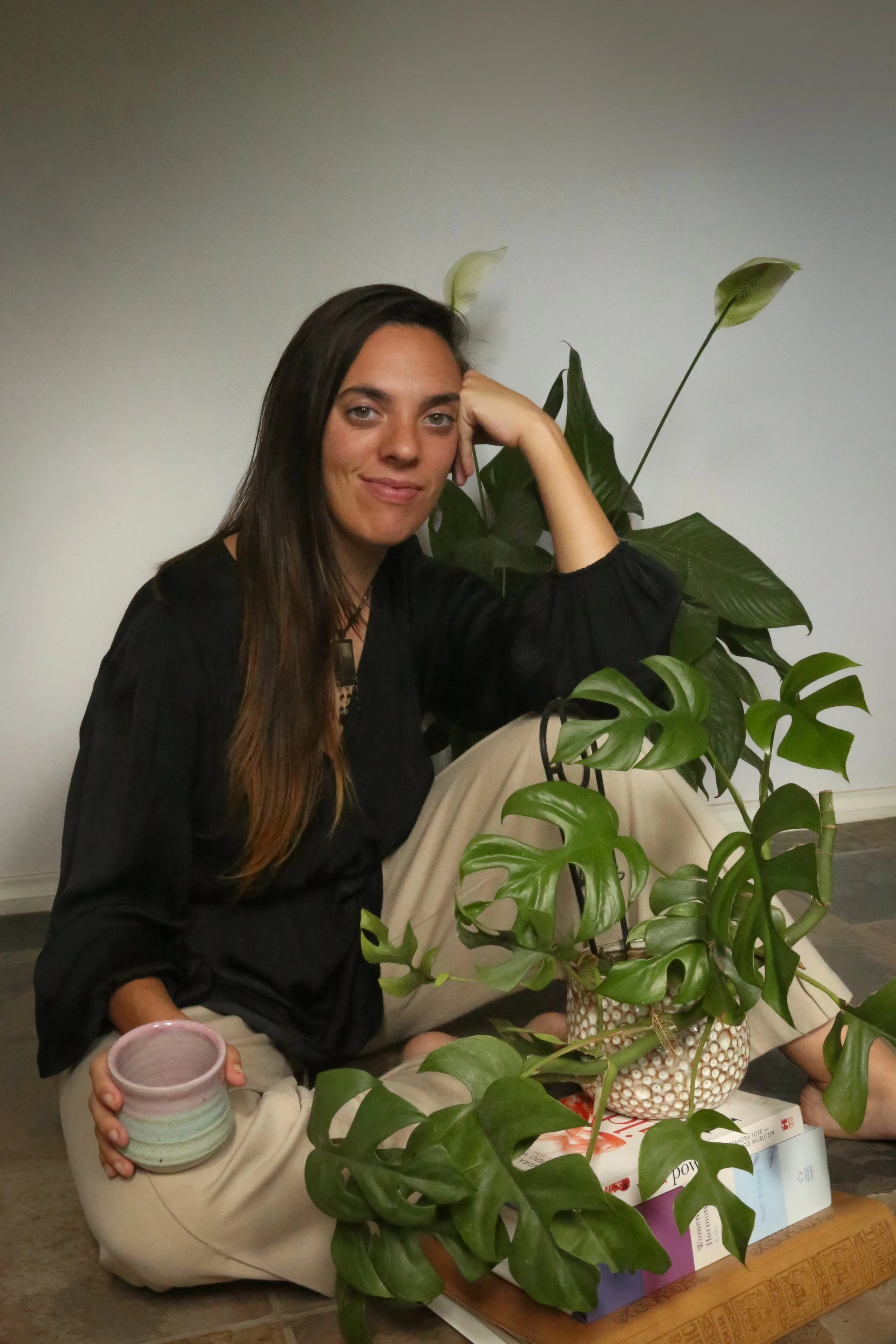
About the author
Karinda John is a Naturopath (BHSc) and Fertility Awareness Teacher specialising in women's hormonal health. She works with women who are tired of being told their symptoms are normal, helping them understand what their cycle is actually communicating and building the foundations for hormonal balance through functional testing, personalised naturopathic medicine, and body literacy education. She runs the Harmonised Hormones program and is the host of Oh My Menses, co-host of The Nuanced Naturopaths, and created the free Cycle Tracking Guide to help show women that their menstrual cycle matters.
*This blog post is for educational purposes and does not constitute personalised medical advice. If you have concerns about your health, please seek support from a qualified healthcare practitioner.*