What Light Is Actually Doing to Your Hormones (And Why It's More Important Than Any Supplement)
This post is adapted from my conversation with Rachel Hodgens on her podcast Weaving the Wild — Episode 148. You can listen to the full episode here.
There is a conversation your body is having right now.
Not in words. Not even as a thought in your head.
It is an ancient conversation — one your body has been having since you were born… and earlier than that, even.
It's a conversation with light.
And it turns out, that conversation shapes far more of your health than most of us were ever told.
I sat down with my dear friend Rachel Hodgens on her podcast Weaving the Wild to talk about circadian biology — the science of how light from your environment programs your body's daily rhythms. The conversation was long, layered, and genuinely mind-expanding (it’s only part one of two!). Here, I’ve focused on the insights I most want you to walk away with.
What circadian rhythm actually means
Circadian rhythm isn't just about sleep.
Here is as clean a definition as I have found:
Circadian rhythm is a periodic pattern that takes about 24 hours, where the light-dark cycles synchronise biological functions with the environment (Azmi et al 2021)
Your body runs on a clock. That clock was calibrated, over millions of years of evolution, to the one thing in our environment that was the most consistent and guaranteed: the rising and setting of the sun. Weather changes. Seasons change. Food availability changes. But the sun coming up every day and going down every day? That has been the single most reliable feature of life on Earth for as long as life has existed.
And so our genes, our cells, our hormones, our digestion, our immune system — all of it evolved to run in relationship to that rhythm.
What we now call "circadian biology" is, in a sense, just a remembering. We are not inventing a new protocol. We are coming back to what our bodies have always been doing.
The light spectrum across a day: what each part does
Not all light does the same thing. The specific wavelengths of light your body is receiving at any given time of day send a different hormonal signal. Here's the breakdown:
Sunrise: red and infrared light, minimal UV
Sunrise is mostly red and infrared light with very little blue or ultraviolet. This is the body's gentle "okay, we can start waking up" cue. Melatonin begins to ease off. Cortisol begins to rise, slowly.
But there's something else happening here that most people don't know about: infrared and red light at sunrise are crucial for pregnenolone production. Pregnenolone is your master steroid hormone — the starting point from which oestrogen, progesterone, testosterone, cortisol, and DHEA are all made. Without adequate pregnenolone, you cannot make adequate amounts of any of those downstream hormones.
Pregnenolone is made in the mitochondria of your cells. And it requires red light.
This is one of the most compelling clinical reasons I know of to get outside in the morning before you look at your phone. Not just for mood, but for your actual hormonal foundation.
UVA rise: roughly 60–90 minutes after sunrise
As the sun climbs higher, ultraviolet A rays appear. UVA penetrates the cornea of your eyes, where amino acids act as light traps — converting the light into dopamine, noradrenaline, and tryptophan, the precursor to serotonin. Getting morning sunlight exposure during this window — without sunglasses — is one of the most impactful things you can do for mental health and mood regulation. It is not supplementable. It requires the real thing.
UVA also stimulates melanin production. Melanin is more than skin pigmentation. It interacts with water in ways that support energy production and cellular health — and it protects your skin from burning later in the day when UV intensity is higher. Which is why that early morning light exposure is not just nice to have; it's part of your biological sun protection system.
UVB rise: roughly 2 hours after UVA
UVB is what initiates the vitamin D cascade. It penetrates deeply enough into the skin that your body can begin producing vitamin D — which we now understand is actually more like a hormone than a vitamin, involved in immune function, bone health, hormone balance, mood, and more. Taking a vitamin D supplement is not the same thing as this process. The synthesis that happens in response to UVB exposure creates something qualitatively different.
Midday: peak blue light, high cortisol
As the sun reaches its peak, the proportion of blue light in the spectrum increases. Blue light signals wakefulness, cortisol production, and high alertness. This is the time your body is most primed for activity, decision-making, and output.
Afternoon through sunset: the shift back to red
After midday, the spectrum slowly shifts back toward the red end. This is your body's invitation to begin winding down. As blue light decreases and red increases, melatonin production starts to be permitted. Your body is gradually moving from action mode to restoration mode.
Darkness: peak melatonin
In natural darkness, melatonin peaks between 2–4am. This is when the deepest cellular repair, detoxification, and regeneration happen. Melatonin is far more than a sleep hormone — it is one of the most powerful antioxidants in the body, protecting your cells, your DNA, and your neurological function.
Low melatonin has been associated with dementia, schizophrenia, OCD, fibromyalgia, and migraine recurrence. There is, to my knowledge, not a single neurological condition that doesn't have some connection to either disrupted light exposure or suppressed melatonin.
→ If you’re enjoying what you’re reading so far, you might like to join Julie & I for our LIVE Circadian Rhythm masterclass. We’re going deep into circadian science — not just sleep, but how light dictates your liver detox pathways, brain health, thyroid function, gut microbiome and even fertility.
We’ll cover the depth of the science, but also the incredibly simple and practical steps to harness the power of sunlight (and darkness!) for whole body health and healing. We’re going to show you how to align your light, your sleep, and your eating patterns to work with your biology instead of constantly fighting it.
Instead of another list of rules or expensive supplements, you will leave this session with a profound understanding of how to use your daily environment as medicine. You’ll know how to read your body’s signals, how to customise light exposure for your unique skin tone and lifestyle, and if you’re a practitioner, how to integrate these zero-cost, high-impact tools into your client sessions for faster, more sustainable results.
» REGISTER FOR OUR LIVE CIRCADIAN MASTERCLASS HERE «
Your mitochondria need light (not just food)
The mitochondria in your cells are often called "the powerhouses of the cell." But that framing undersells them.
Your mitochondria make cellular energy (ATP), produce water, make pregnenolone, determine which genes get expressed, and govern how cells are recycled or eliminated — which is directly relevant to tumour development and cancer prevention. They are at the seat of your health in a way that most clinical training doesn't adequately address.
Here's what's relevant for this conversation: mitochondria need electrons to function. Electrons come from three sources — food, the earth (which is why grounding matters), and sunlight.
A fatty acid molecule called DHA, concentrated in the mitochondria, converts the energy from sunlight into electrons. This means that sunlight is not just influencing your hormones through your eyes and your mood through serotonin. It is literally providing raw material that your cells use to make energy.
And here's the disruption side of it: inappropriate blue light exposure — from screens, from fluorescent office lighting, from overhead LEDs at night — actively inhibits mitochondrial function. The research on this is still emerging, but the implication is significant. If mitochondrial dysfunction underlies a majority of chronic disease (which is increasingly the picture we're building), then the light environment you live in every day is a direct contributor to how healthy or unwell your body is over time.
The mismatch problem: why sunglasses and sunscreen matter more than you think
Your body has two main ways of reading light: through your eyes (which sets your master body clock in the brain's suprachiasmatic nucleus) and through your skin (which influences local tissue and organ function).
Here's what matters clinically: your eyes and your skin need to be on the same page, and receive the same message from light. When they don't, mitochondrial function is disrupted.
Wearing sunglasses in the morning means your skin is receiving UVA while your eyes are shielded from it. Wearing sunscreen without sunglasses, or sunglasses without sunscreen, creates the same mismatch. Even just scrolling on your phone outside means your eyes are receiving static artificial blue light while your skin is receiving the dynamic full spectrum of sunlight. These mismatches quietly create biological disharmony over time.
The practical invitation: try to spend a small amount of time in the morning — even 10 to 20 minutes — without sunglasses, without sunscreen, outside, letting your eyes and skin receive the same signal. Obviously not staring directly at the sun. Just present to it.
Light, blood sugar, and your hormones
This was the research finding that genuinely surprised me most in preparing for this conversation.
We know that the hormones governing blood sugar regulation — insulin included — follow a 24-hour circadian rhythm. We know that low melatonin is associated with insulin resistance and type 2 diabetes. But here is the specific piece that floored me:
In one study, 15 minutes of exposure to red light at 670 nanometres increased mitochondrial energy production — and reduced blood sugar elevation after glucose consumption by 28%, compared to people who had the same amount of glucose but no red light exposure.
I treat insulin resistance regularly. Blood sugar dysregulation shows up in PCOS (now PMOS), in hormonal skin conditions, in irregular cycles, in energy crashes, in luteal phase symptoms. And here is a simple, free, available intervention that changes blood sugar response by nearly a third. This is not replacing dietary intervention or naturopathic treatment. But it absolutely belongs in the conversation.
The liver, the ovaries, and the systems you didn't know were running on light
The liver has one of the highest concentrations of "clock genes" — genes directly controlled by the time of day as communicated through light exposure. This makes sense when you consider how central the liver is to every system in the body: bile production, iron recycling, fat metabolism, hormone detoxification, antioxidant activity, immune function. If your liver function is dysregulated by circadian disruption, the downstream effects touch nearly everything.
For anyone navigating PCOS/PMOS or polycystic-type presentations: melatonin plays a specific and significant role in PMOS development. Getting your circadian rhythm harmonised with natural light cycles — not as the only intervention, but as a foundational one — matters for your ovarian health in ways that are often completely overlooked.
For breastfeeding women: milk composition changes throughout the day in response to circadian rhythm. Morning milk has higher cortisol. Night milk has higher melatonin. If you're expressing and storing milk, this is worth knowing about.
Why the simplest things are the hardest to trust
I want to name something that Rachel and I talked about in this conversation, because it comes up every time I start discussing circadian biology with clients or in my community.
The things that come from this framework are free. Go outside in the morning. Watch the sunrise when you can. Avoid bright screens in the evening. Sleep in darkness.
And that simplicity makes it hard to trust. We are so conditioned to believe that complex problems require complex solutions — that a real health protocol involves testing and supplements and protocols — that something as ordinary as morning light feels almost too simple to take seriously.
I want to offer you a reframe.
Your body has been running on this rhythm for millions of years. It is the most deeply embedded, most fundamentally hardwired thing your biology knows how to do. The reason it feels simple is because it is ancient medicine. Not in a woo woo sense. In the most literal, biological, evolutionary sense.
It doesn't require anything to be invented. It just requires you to return.
Where to start
If any of this has landed, here's what I'd invite you to begin with:
Morning: Before you look at your phone, get outside. Even five minutes. No sunglasses. Let your eyes receive the early morning light. If you can do this within an hour of sunrise, even better.
During the day: Get some skin exposure to sunlight during daylight hours, without sunscreen where you can, for at least part of that time.
Evening: Start dimming artificial lights after sunset. Candles, salt lamps, and warm low-level lighting are much closer to the spectrum your body expects. Blue light-blocking glasses if screens are necessary.
At night: Sleep in as much darkness as possible. Even light through eyelids can suppress melatonin and interrupt internal repair processes. Block-out curtains are one of the most underrated health investments you can make.
This information is not a biohacking protocol. It is a returning to our natural rhythm.
This is Part 1 of a two-part conversation. Part 2 gets into practical strategies for supporting your circadian rhythm in the modern world — how to reduce the kinds of light exposure that quietly throw everything off. Listen to both episodes on Weaving the Wild with Rachel Hodgens.
If you're curious about how your hormones, your cycle, and your circadian rhythm are connected and what it would look like to investigate them properly — a free Body Story Call is the place to start. Book in here.
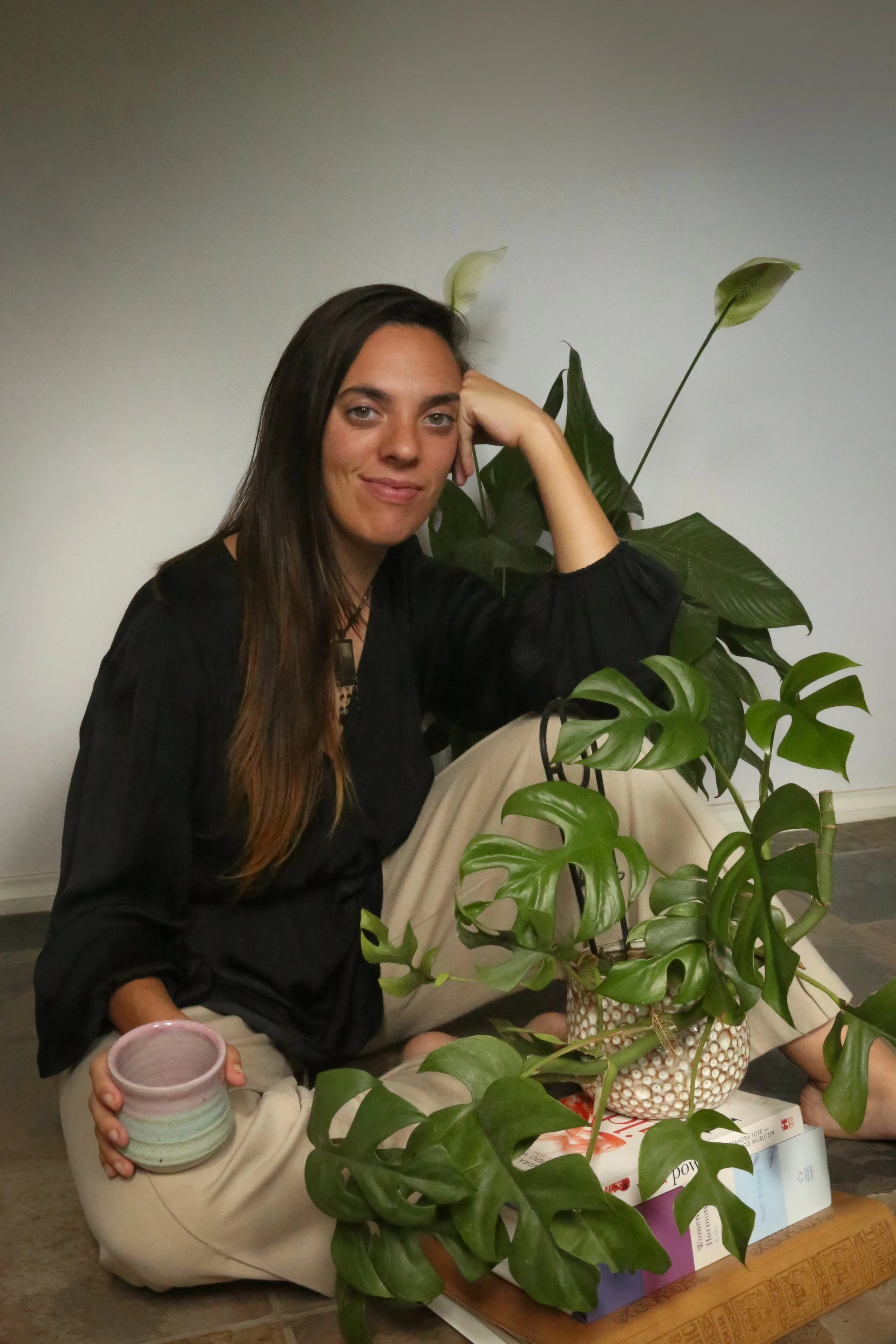
About the author
Karinda John is a Naturopath (BHSc) and Fertility Awareness Teacher specialising in women's hormonal health. She works with women who are tired of being told their symptoms are normal, helping them understand what their cycle is actually communicating and building the foundations for genuine hormonal balance through functional testing, personalised naturopathic medicine, and body literacy education. She runs the Harmonised Hormones program and is the creator of the free Cycle Tracking Guide.
*This blog post is for educational purposes and does not constitute personalised medical advice. If you have concerns about your health, please seek support from a qualified healthcare practitioner.*