Why So Many Women Are Scared of Their Own Bodies (And What Actually Helps)
This post is adapted from Episode 33 of Oh My Menses. You can listen to the full episode here.
I want to talk about something I've been noticing more and more — in the women I work with, and honestly, in myself.
There's a lot of fear sitting in and around our bodies.
It shows up as health anxiety. As the late-night Google search rabbit hole. As the woman who feels a new symptom and immediately goes from "oh, that's new" to "holy shit, what if this is something serious?" in about seven seconds. As the self-described hypochondriac who prefaces every question in a consult with "I know this probably sounds crazy, but..."
It doesn't sound crazy. I hear it constantly. And I've been thinking about why.
What health fear actually looks like
Health anxiety doesn't always look like obvious panic. Sometimes it's subtle. It shows up in the specific flavour of questions my clients ask me — the ones that start with a small, fair enough symptom and jump straight to a complex, scary conclusion.
"I've been bloated for a week. I think I might have SIBO."
"I feel so mentally unstable before my period. I think I need an SSRI."
"My period is two days late. Do I have PCOS? Am I infertile?"
I say this with so much love if you've ever asked yourself these questions, or asked me these exact questions. I've been there. I've sat in that spiral. This isn't coming from a place of judgment. It's coming from a place of genuinely wanting to understand what's underneath it, because the fear itself is causing harm.
Here's the thing most people don't realise: your body reacts to stress whether it's real or imagined. If you're lying in bed thinking catastrophic thoughts about a symptom you're experiencing, even without anything outwardly stressful happening, your body registers that as a stress event. Physiological stress processes begin. Cortisol rises. Inflammatory pathways activate.
And the fear about the symptom? Very often makes the symptom worse. Stress can cause acne breakouts, eczema flares, more painful periods, delayed ovulation, and a longer cycle. The very thing you're afraid of is being perpetuated by the fear itself. It’s a cruel cycle.
Where did this fear come from?
When I sit with this question (and I've been sitting with it a lot), I think the answer is a bit of all of the following.
Maybe it was passed on to you — from your mother, your aunties, your grandmothers — who had their own complicated relationships with their bodies and their health.
Maybe it was shaped by the wellness and healthcare machine: an industry whose business model depends on convincing you that something is always wrong, always improvable, always one supplement or protocol away from being fixed.
Maybe it came from experiencing healthcare systems that didn't listen to you. From walking out of appointments with more confusion than you walked in with. From being told "everything looks normal" while feeling anything but. From having your symptoms minimised, dismissed, or managed without being explained. If you have a history of being ignored in a medical context, of course your fear response turns the dial up. Your body learned that it had to escalate things in order to be taken seriously.
But when I trace all of these threads back to their common denominator, I keep landing in the same place:
The root of health fear, in most women I work with, is a lack of self-understanding.
Because here's what's true: the less you know about your body, the harder it is to trust it. And when you don't trust it, every new sensation feels like mystery. And mysteries can trigger fear.
We are not taught this stuff. We are not taught why our bodies do what they do, what certain patterns of symptoms mean, how hormones fluctuate and what that creates in our energy, our mood, our digestion, our skin. Most of us arrive in our adult lives with almost no framework for understanding what's happening inside us. And then, when something feels off, our first response isn't curiosity… it's fear. And then we're told to outsource that fear to an expert, who may or may not have time to actually investigate what's driving it.
So we stay stuck in it.
From fear to curiosity: a practical shift
There's a concept I was introduced to through DBT — dialectical behaviour therapy — that I've found genuinely useful, both personally and clinically. It's the practice of looking at a situation through what I'd call a neutral lens: stating only the facts of what you're actually experiencing and witnessing, without the layers of interpretation, catastrophising, and inference that fear adds on top.
Here's what the same situation looks like through two different lenses.
Through the fearful lens: "I've had loose bowel movements for two days. Oh God, I think I have a parasite. Do I need to go to the hospital? What if my gut is damaged forever? What if this never gets better?"
Through the neutral lens:"I've had some loose bowel movements for the last two days. Let me look at what I've eaten this week. Have my stress levels been elevated? Have I had any new foods or alcohol? Could this be a reaction to something? Is my body trying to clear something out?"
Same physical experience, completely different internal reality. And a completely different path forward.
The neutral lens doesn't mean ignoring symptoms or dismissing your body's signals. It means taking the emotional charge out of them enough that you can actually read what they're saying. It means treating your symptoms less personally.
You can try this as a journaling practice: write out only the facts of what you're experiencing. Not what you fear it means. Not what it could lead to. Just exactly what you're noticing, in plain language, as if you were a neutral observer. You might be surprised how much clearer the picture gets when the fear is taken out of it.
What the fear is often actually trying to tell you
Here's something I've found to be consistently true: fear around our bodies doesn't usually want us to freak out. It wants us to listen.
The health fear, at its root, often just wants to know that someone is paying attention. That the signals your body is sending aren't going to be ignored or dismissed. That someone cares enough to take action on what they're noticing.
This is especially true if you have a history of being dismissed in a medical context. If your symptoms have been minimised before — if you've been sent away without answers, told you're fine while feeling anything but — of course your fear response is louder. Of course it escalates. It learned that escalation was the only way to be heard.
So rather than fighting the fear, I invite you to welcome it. Hear what it's saying.
Ask: “what does this fear want me to know? What would help this part of me feel more at ease?”
Often, the answer is simple. Someone's looking out for you. You're paying attention. You've noticed this, and you're not going to just push past it and hope it resolves.
That's not the same as spiralling. That's self-care at its most fundamental level, rather than the Sunday bubble bath and pedicure we’ve been told is ‘self-care’.
Body literacy: the actual antidote
If the root of health fear is a lack of self-understanding, then the path through it is body literacy.
Being literate about what your body does.
Not more information about health in general. Not more content about hormones in an abstract context. But genuine, specific knowledge of how your body communicates: what your patterns are, what precedes certain symptoms, how you change as your cycle changes, what signals your body sends when it needs something different.
This is why cycle tracking is the foundation of everything I teach and everything I do in my clinical practice. When you track your cycle properly — not just your period, but your cervical fluid, basal body temperatures, your energy, your mood, your digestion, your skin across an entire cycle — you build a personal data set that no one else has access to. You start to see the patterns. The anxiety that arrives on the same cycle day every month stops being mysterious. The week where you can't access solid energy and mental clarity at work stops feeling like a personality flaw and starts feeling like information. The version of yourself in the second half of the month that you've been apologising for, that your partner tip-toes around, starts to make sense.
And when things start to make sense, the fear has less to grip onto.
This is body literacy in action. And it is not something you can outsource. No practitioner can build it for you. No app can give it to you. It has to be cultivated by you, in your body, over time. And yes, I can absolutely help you go deeper — reading the patterns, decoding them, investigating what's driving them, building a treatment approach that's genuinely tailored to your body. That's exactly where my work begins. But the foundation is yours to build, and you’ll have that foundation for LIFE.
Self-trust: where you're headed
The destination in all of this is self-trust.
Self-trust is not something you're either born with or you're not. It is cultivated. It is built by listening to your body's signals and actually acting on them. By feeling the nudge to rest and… actually resting. Feeling thirsty and… drinking water. Feeling the urge to pee and… going to the toilet (instead of fidgeting at your desk for another 20 minutes until you’re busting… IYKYK). By noticing the thing your body is asking for and following through rather than overriding it. By holding the boundaries you set for yourself — which, by the way, are not about what you declare to other people, but about how you respond when other people (and all of life’s fun surprises) come at you.
You cannot control what's sent your way. You can control how you respond to it.
Every time you receive a signal from your body and you honour it, you are building evidence: evidence that you can be trusted with your own experience. And that accumulated evidence is what transforms health fear into something else: a capacity to meet your body with curiosity rather than dread.
When self-trust is strong, you become far more resilient to everything the health and wellness industry throws at you. The marketing that's constantly implying something is wrong with you starts to hit differently. The practitioner who dismisses you without investigation becomes easier to move on from. The next new symptom doesn't send you spiralling — it sends you toward questions and compassionate curiosity.
That's the journey. From "something is wrong with me" to "my body is communicating something and I'm capable of understanding it."
Where to start
If any of this resonates, if you've recognised yourself in the health spiral, or if you know you're operating without much real self-knowledge about your own body, here's where I'd begin:
Download the free Cycle Tracking Guide. It’s a basic enough but rich guide of exactly this foundation. How to track your cycle beyond just your period. What the different signs and symptoms communicate. How to start building the personal data set that leads to body literacy. If you do nothing else right now, start there. Download it here.
And if you're already tracking your cycle: if you have the awareness, if you can see the patterns, but you don't know what they're telling you or how to respond — that is exactly where I come in, and why I started offering my free Body Story Calls. You share what you've been noticing. I help you translate it. We map out what your body is communicating and how I'd approach investigating it & bringing your body back into balance. Book that free call here.
The fear you hold about your body is not evidence that something is fundamentally wrong with you. It is evidence that you were never given the tools to understand your body in the first place.
That is not your fault. And it is absolutely something that can change.
Your body has been communicating with you your whole life. You just haven't always had the language to hear it.
That's what we're building here.
Listen to the full Oh My Menses episode this post is adapted from here. If you're not already on my newsletter list, downloading the free Cycle Tracking Guide will bring you into my community, where I share weekly musings, clinical insights, and my own cycle journey.
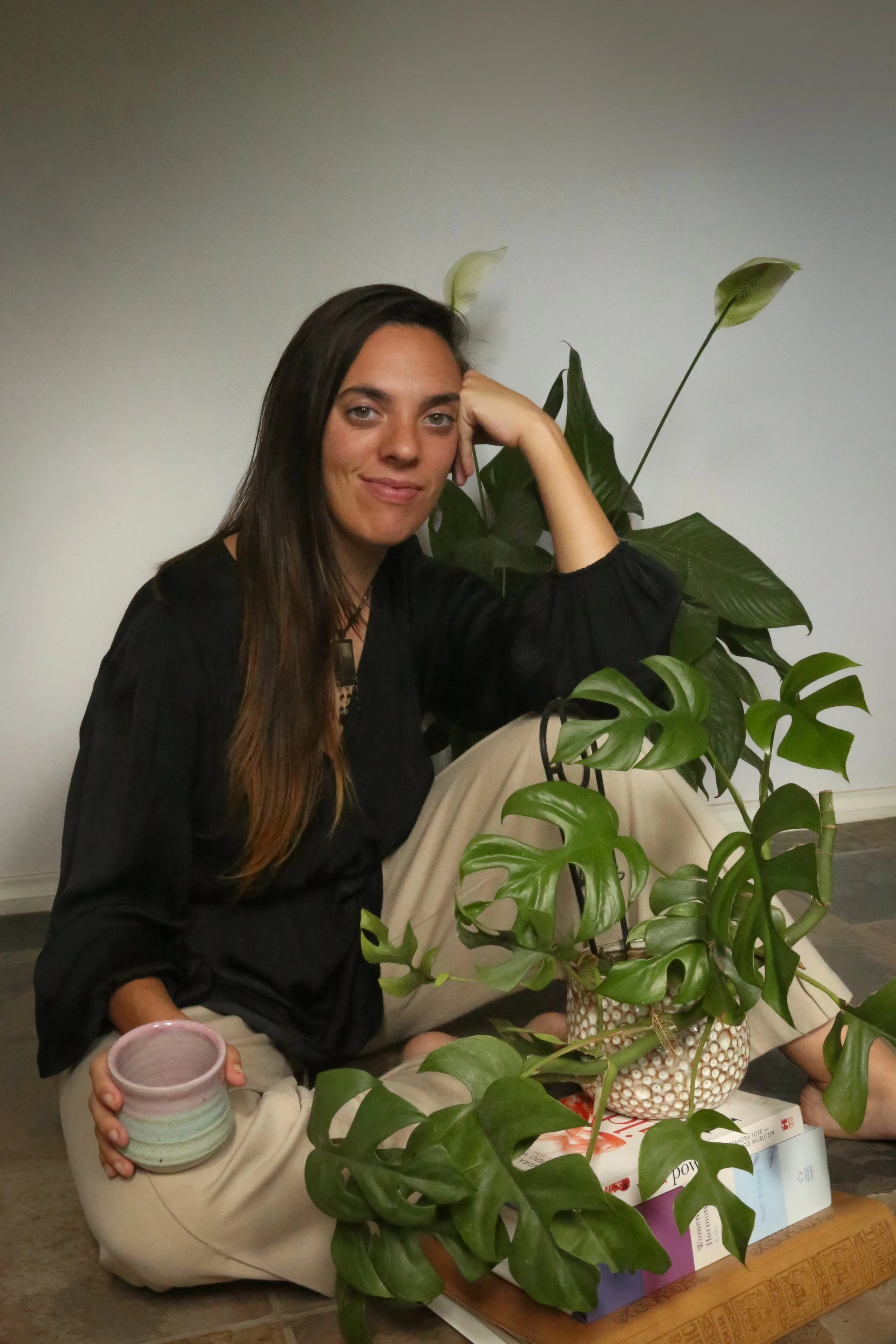
About the author
Karinda John is a Naturopath (BHSc) and Fertility Awareness Teacher specialising in women's hormonal health. She works with women who are tired of being told their symptoms are normal, helping them understand what their cycle is actually communicating and building the foundations for genuine hormonal balance through functional testing, personalised naturopathic medicine, and body literacy education. She runs the Harmonised Hormones program and is the creator of the free Cycle Tracking Guide.
*This blog post is for educational purposes and does not constitute personalised medical advice. If you have concerns about your health, please seek support from a qualified healthcare practitioner.*