PMOS Natural Treatment: A Naturopath's Guide to Polyendocrine Metabolic Ovarian Syndrome (formerly Known as PCOS)
You've probably been told you have PCOS (Polycystic Ovarian Syndrome). Maybe you were handed a diagnosis after a 10-minute appointment, a blood test and a pelvic ultrasound, then given a prescription for the pill or metformin, and sent on your way with a pamphlet that raised more questions than it answered.
Or maybe you've been searching for answers for years.
Irregular cycles, persistent acne, exhaustion that isn’t fixed with more sleep, hairs popping up on your chin or chest, and the words “polycystic ovary syndrome” have been floating around your life without ever quite explaining what's actually going on in your body.
Here's something worth knowing: as of May 2026, that name PCOS has officially changed. And the reason it changed tells you almost everything about why so many women have been left confused, under-treated, and wondering if it’s all in their head.
What is PMOS? (And why it’s PMOS instead of PCOS)
In February 2026, following an unprecedented global consensus process led by Monash University's Centre for Research Excellence in Women's Health, involving over 14,000 survey responses from patients and clinicians across every world region, the condition formerly known as polycystic ovary syndrome (PCOS) was officially renamed to polyendocrine metabolic ovarian syndrome (PMOS).
This wasn't a cute rebrand for a rising syndrome. It was a correction. One that had been called for by researchers, clinicians, and patients for over a decade.
The problem with “polycystic” has always been this: it implies the presence of pathological ovarian cysts. But in cases of PMOS, what’s found on ultrasound aren't cysts. They're follicles — the same small follicles your ovaries would normally contain at various stages of development.
In PMOS, due to hormonal disruption and impaired ovulation, these follicles can accumulate and appear enlarged on ultrasound, creating a “cystic” appearance. But pathological ovarian cysts are not a feature of this condition. The name was always inaccurate.
More than that, the old name implied PCOS was primarily an ovarian disorder. But research has consistently shown that what we were calling PCOS is actually a multisystem condition underpinned by endocrine and metabolic dysfunction — involving insulin, androgens, neuroendocrine pathways, and ovarian hormones all at once. The features are metabolic, reproductive and psychological.
The new name, polyendocrine metabolic ovarian syndrome, removes the misleading reference to cysts. It acknowledges the multiple interacting hormonal systems in the body. And it creates space for women to receive an explanation that actually connects to what they're experiencing.
The consensus that established this name was rigorous. The process used Delphi surveys, international workshops, marketing and implementation analysis, and ultimately agreement between both patients and health professionals. A three-year global transition to the new name is now underway, with integration into international health systems, clinical guidelines, and disease classification codes.
A note on terminology: Because this name change is recent and the transition is still in progress, PCOS will continue to appear in health settings, clinical guidelines, and online searches for some time. Both terms refer to the same condition. Throughout this post, I'll use PMOS to reflect the correct current name, and note PCOS where it appears in existing research.
Why does the name change matter?
Because the name has shaped how this condition has been explained, understood, and treated — and not always well.
The reproductive focus of the old name contributed to a narrow treatment picture. Women were treated for the symptom most visible on a scan rather than the hormonal and metabolic drivers underneath. The misleading “cysts” reference caused confusion in consultations and left women with inaccurate ideas about their own anatomy. The diagnosis carries significant psychological weight, particularly in cultural contexts where fertility is tied to identity or worth, and the specificity of the name reinforced that weight unnecessarily.
The inaccuracy has also had practical consequences for diagnosis. Up to 70% of people with PMOS remain undiagnosed. That statistic, one in eight women undiagnosed, points to a condition that is both far more common than most people realise and far more frequently missed than it should be.
What I see in online naturopathic clinic for women is the downstream effect of that. Women who have spent years being told their symptoms are “normal.” Women who have had their concerns dismissed or attributed to only stress. Women who have tried numerous approaches, be it medication, dietary changes or supplement protocols, without anyone ever investigating the root cause driving their specific pattern.
PMOS is not one thing. It has distinct types, each with different underlying drivers. And the type you have changes what will actually work for you.
What are the 4 types of PMOS (formerly PCOS)?
One of the most important things I wish every woman with PMOS understood is this: the diagnosis doesn't tell you the whole story. The label describes a constellation of features — irregular cycles, androgen excess, polycystic ovarian appearance on ultrasound, elevated AMH — but it doesn't tell you why those features are present in your body specifically.
That's where the functional naturopathic approach becomes so useful. Rather than treating the label, we investigate the driver. These are the four primary patterns I work with.
Insulin-Resistant PMOS
This is the most common presentation, affecting the majority of people with PMOS.
Insulin resistance means your cells aren't responding effectively to insulin, so your body produces more of it. That excess insulin then stimulates the ovaries to produce more androgens — the hormones behind acne, hirsutism (excess hair growth), and hair thinning. It also disrupts ovulation.
Signs this may be your type: weight gain especially around the abdomen, persistent sugar cravings, energy crashes after meals, skin tags, acanthosis nigricans (darkening of skin around the neck or underarms), family history of type 2 diabetes.
What helps: blood sugar regulation is key here — not through deprivation, but through building metabolic resilience. We look at your dietary patterns, meals and eating timing, movement that genuinely supports insulin sensitivity (e.g. like squats and calf raises), and targeted naturopathic treatment. Functional testing through the EndoMAP dried urine hormone panel gives us a precise picture of what your hormones are doing across the cycle, which makes the treatment far more targeted than a blanket approach.
Inflammatory PMOS
In this pattern, chronic low-grade inflammation is the primary driver. Inflammation disrupts hormone signalling and ovarian function, and can exist entirely independently of body weight. This is why the “just lose weight” advice is not only unhelpful but clinically irrelevant for many women — inflammation doesn't resolve with weight loss alone, and in some cases doesn't correlate with weight at all.
Signs this may be your type: you may have other inflammatory conditions (skin conditions, gut issues, joint pain, frequent illness), you tend to be fatigued even when well-rested, you may react strongly to stress, and standard PCOS advice hasn't improved your symptoms.
What helps: identifying and addressing inflammatory triggers is the priority. This often involves gut investigation, food sensitivity assessment, nervous system regulation, and anti-inflammatory naturopathic support. The foundations — sleep, circadian rhythm, gut health, blood sugar stability — are where we start, because they are the foundation everything else is built on.
Adrenal PMOS
This type involves elevated androgens that come primarily from the adrenal glands rather than the ovaries. This distinction matters enormously, because the treatment is different — and because many women with this pattern don't fit the typical PMOS picture and can go unrecognised for years.
Adrenal-type PMOS is strongly linked to chronic stress and hypothalamic-pituitary-adrenal (HPA) axis dysregulation. This axis, part of your body's stress response system, when under prolonged demand, can drive elevated DHEA-S, an adrenal androgen, which contributes to the hormonal and symptomatic pattern associated with PMOS.
Signs this may be your type: normal insulin levels, high DHEA-S on testing, worsening symptoms during or after periods of significant stress, fatigue, anxiety, disrupted sleep. Your ovaries may look normal on ultrasound.
What helps: nervous system support is not optional here — it is the core of the work. This means genuinely addressing the load your nervous system is carrying, changing how you view and respond to life and its stressors, and not simply adding adaptogens to an already depleted system. This is one reason I assess nervous system status early in the Harmonised Hormones program — it is a foundation, not an afterthought.
Post-Pill PMOS
This pattern emerges after stopping hormonal contraception, particularly the oral contraceptive pill. The pill suppresses ovulation and alters the hormonal environment. When it's removed, the body needs time to restore its own rhythm — and for some women, that process is disrupted, resulting in a temporary (but sometimes prolonged) hormonal picture that resembles PMOS.
Signs this may be your type: your symptoms began or significantly worsened after coming off the pill; you had clear, regular cycles before starting contraception (but not always the case); your acne, cycle irregularity, or androgen-related symptoms appeared post-pill.
What helps: supporting the body's return to natural hormonal cycles is the goal. This is a fundamentally different approach to type 1 or type 2 PMOS — it's less about treating pathology and more about supporting recovery. Cycle tracking is often deeply informative here, as it allows us to watch the cycle re-establish and identify where support is most needed.
Can PMOS be managed naturally?
Yes, and this is not a radical view. It is well-supported by evidence and aligns with what I see consistently in my clinic.
Natural and naturopathic approaches to PMOS work best when they're targeted to the type and driven by testing. Generic “PMOS diet and lifestyle advice” without knowing which driver is dominant is like treating every infection with the same antibiotic — you might get lucky, but you're probably missing the point.
What a root-cause naturopathic approach looks like in practice:
Functional hormone testing. The EndoMAP dried urine hormone panel is my preferred investigation for PMOS. It gives us a comprehensive view of oestrogen, progesterone, androgens, cortisol, and their metabolites. This is far more informative than standard blood tests, which often miss the metabolite picture, the HOW your hormones are working in your body.
Building the foundations first. Before we layer in targeted interventions, we assess and support the foundations: nervous system regulation, sleep and circadian rhythm, gut health, blood sugar stability. These are not secondary concerns. In PMOS specifically, they are often where the most potential lives.
Cycle tracking as a clinical tool. Learning to track your cycle and learning body literacy — basal body temperature, cervical fluid, symptoms mapped across the phases — is one of the most powerful things you can do with PMOS. Not because it balances your hormones, but because it teaches you to read what your body is communicating. It turns vague symptoms into meaningful data. It builds what I call cycle trust, a felt understanding of your body's rhythm that no diagnosis can give to or take from you.
Personalised naturopathic medicine. Herbal and nutritional interventions, prescribed to your specific picture, not a generic PMOS protocol.
PMOS is not a life sentence. And it is not a condition defined by its most misleading feature: a scan finding that was never accurately named in the first place. It is a multisystem, multifactorial condition with real, targeted, effective treatment options. It deserves proper investigation and a clinician who takes the complexity seriously.
How does cycle tracking help with PMOS?
Cycle tracking is often under-discussed in the conventional PMOS conversation, and I think this is a significant oversight.
For women with PMOS, cycles can be long, irregular, or seemingly absent. That irregularity can make tracking feel pointless, but it's actually where tracking becomes most useful.
When you learn to track basal body temperature (BBT) and cervical fluid, you start to see what your cycle is actually doing rather than what you're assuming it should do. You can identify whether ovulation is occurring, delayed, or absent. You can see how your body responds to changes in sleep, stress, or dietary patterns. You have data — your own, embodied, daily data — that is far more nuanced than a blood test taken on one day of the month.
Tracking also shifts the relationship you have with your body. Rather than waiting for a period that may not arrive, or feeling alarmed by every deviation, you develop an understanding of your pattern. You begin to trust your cycle rather than fear it.
This is body literacy. And for women with PMOS, who have often spent years feeling like their body is confusing, unreliable, or working against them, it is often one of the most quietly transformative parts of the work.
My free Cycle Tracking Guide is a good starting point if this is new to you. It covers the basics of cervical fluid, BBT, symptom tracking and how to start reading your cycle with curiosity rather than anxiety.
What does naturopathy for PMOS actually involve?
I want to be specific about this, because “naturopathy” can mean very different things.
In the Harmonised Hormones program, the process looks like this:
We start with a 90-minute initial consultation. Not a rushed 10 minutes. Because PMOS (and more importantly, YOU) have a history, and that history matters. We go through your full symptom picture, cycle history, relevant health background, and what you've already tried. Who you are as a person, what motivates you and what you struggle with.
From there, we complete the Wholistix BodyWise Body Intelligence Assessment. This is a comprehensive functional assessment that looks at how your body is working across multiple systems — not just your hormones in isolation, but the gut, nervous system, circadian rhythm, and metabolic picture combined.
Functional hormone testing through the EndoMAP panel gives us a detailed hormonal map. This informs the personalised treatment plan, which includes herbal and nutritional formulas prescribed to your specific pattern, dietary and lifestyle adjustments, and cycle tracking guidance.
Ongoing fortnightly sessions track your progress and adjust the plan as needed. WhatsApp support between sessions means you're not navigating this alone between appointments. The program runs over three or six months, depending on what your presentation calls for.
This is not one-size-fits-all. It is designed around your body, your history, and you.
If this sounds like the kind of support you've been looking for, I'd love to have a conversation. Book a free Body Story Call, a 15-minute conversation about what's been going on for you and whether working together makes sense.
Frequently Asked Questions
Can I have PMOS (PCOS) without having irregular periods?
Yes. While irregular or absent periods are one of the diagnostic criteria, not everyone with PMOS presents with obvious cycle disruption — particularly in the early stages, or in women who are lean and metabolically healthy in other respects. Elevated androgens and polycystic ovarian morphology on ultrasound can be present without significant menstrual irregularity. This is one of the reasons PMOS is so frequently under-diagnosed.
Is the pill a good treatment for PMOS?
The pill suppresses the hormonal activity associated with PMOS symptoms — it reduces androgen production and can seemingly ‘regulate’ a period — but it doesn't address the underlying drivers. It is symptom management, not treatment. The pill shuts down ovulation, and your natural cycle, resulting in an apparent period, rather than actually supporting your natural cycle. When the pill is stopped, the underlying hormonal pattern returns. There is also a recognised post-pill presentation of PMOS in which stopping the pill can temporarily worsen symptoms for some women. If the pill is your current choice and it's working for your quality of life, that’s valid. But it is worth knowing what it does and doesn't do, and that there are other options.
How long does it take to see improvement with natural approaches?
This depends significantly on the type, the severity of the presentation, and the foundations you're starting from. Most women see meaningful changes within three months of targeted support — improved cycle regularity, reduced androgen-related symptoms, better energy. Significant hormonal recalibration often takes six months or longer. This is not a quick fix, and I won't pretend it is. It is, however, real and sustainable change that can last a lifetime if you build the foundations right, rather than symptom suppression.
Do I need to lose weight to manage PMOS?
No. Weight loss is neither a prerequisite for nor the primary treatment for PMOS. While body composition and metabolic health are relevant for some presentations — particularly insulin-resistant PMOS — the relationship is complex, bidirectional, and often used reductively in clinical settings. Many women with PMOS have been told to “just lose weight” without any investigation into what is driving their hormonal picture. This approach misses the majority of what's actually going on, and can cause significant harm. Treating the driver — not the weight — is where meaningful change happens.
Does PMOS impact my fertility forever?
Absolutely not. PMOS affects ovulation, which affects fertility — but impaired ovulation is not the same as no fertility. Many women with PMOS conceive naturally. Many more conceive with targeted support that restores or supports ovulation. Understanding your cycle through tracking is one of the most useful tools for fertility with PMOS, because it allows you to identify if and when ovulation is occurring. If fertility is part of your picture, this is absolutely something to investigate, not assume is impossible.
Is naturopathy right for your PCOS/PMOS?
If you've been through the conventional medical system, come out with a diagnosis (or a non-diagnosis), been offered the pill or Metformin or a referral to a specialist, and you're still looking for something that actually addresses the *root* of what's happening in your body, then yes. A holistic naturopathic approach is worth exploring.
It's not a quick fix. Hormone healing takes time — typically a minimum of 3 menstrual cycles of consistent, targeted support before we see meaningful, lasting change. But the changes that come from addressing the root cause are durable in a way that symptom management never quite is.
If you'd like to explore what a personalised, root-cause approach to your PCOS could look like, you're welcome to:
👉 Take the free Hormone Pattern Quiz to get a brief idea of your body’s hormonal pattern
👉 Book a free 15-minute Body Story Call to chat about your PCOS and whether working together is the right fit
👉 Learn about Harmonised Hormones, my 3 or 6 month naturopathic program for women with hormone imbalance, PCOS, and menstrual cycle concerns
A note on PMOS or PCOS diagnosis
You don't need an official PMOS/PCOS diagnosis to deserve proper investigation and care. And having a PMOS/PCOS diagnosis doesn't mean your symptoms are identical to someone else's, or that the same treatment will work for both of you.
Diagnoses can be useful as a framework — but they can also be limiting, especially when they lead to generic treatment approaches that ignore the individual picture underneath.
In my practice, I'm always more interested in *your* body than the label it's been given. What your symptoms are telling us. What your cycle is showing. What your stress, your history, your gut, your nervous system, and your hormones are communicating together.
That's where the real answers are.
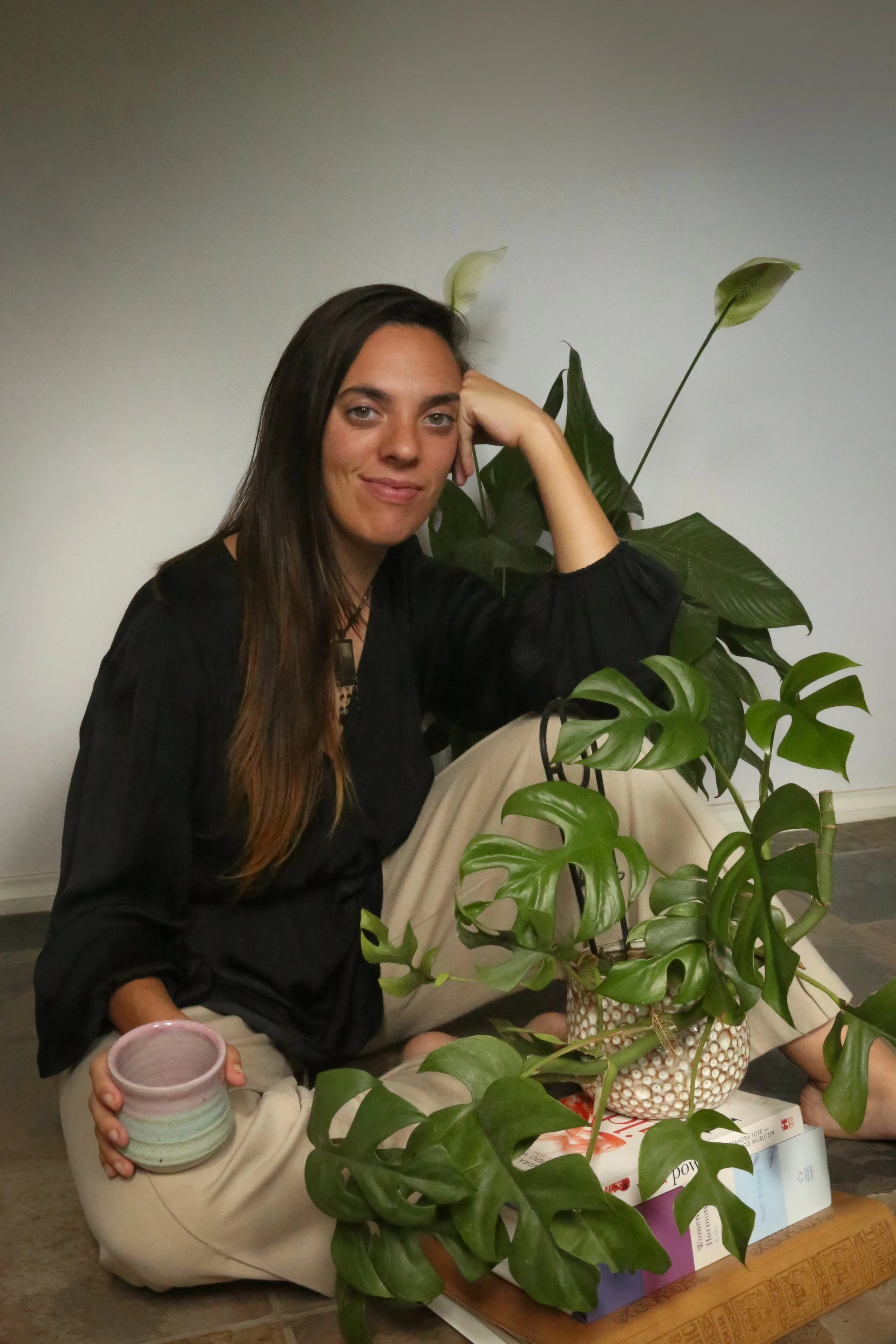
About the author
Karinda John is a Naturopath (BHSc) and Fertility Awareness Teacher specialising in women's hormonal health. She works with women who are tired of being told their symptoms are normal, helping them understand what their cycle is actually communicating and building the foundations for genuine hormonal balance through functional testing, personalised naturopathic medicine, and body literacy education. She runs the Harmonised Hormones program and is the creator of the free Cycle Tracking Guide.
*This blog post is for educational purposes and does not constitute personalised medical advice. If you have concerns about your health, please seek support from a qualified healthcare practitioner.*
As a naturopath who has always been interested in what symptoms are actually communicating, the PMOS name change feels long overdue. This condition was never about cysts. It was always about an endocrine and metabolic picture that deserved to be taken seriously — in its full complexity, not just its most visible feature on an ultrasound. I'll be updating all practice materials and client resources to reflect PMOS as the correct terminology going forward.