4 practical tips to reverse your PMOS (that actually addresses the root of it)
Have you heard the news? A certain little syndrome I’ve had beef with for years has finally had a clinical rebrand.
Polycystic Ovarian Syndrome (PCOS) is officially transitioning to a new name: Polyendocrine Metabolic Ovarian Syndrome (PMOS). I had some nuanced and a little bit spicy thoughts on this, which I recorded a podcast episode on, see below.
To intentionally misquote Shakespeare (or some variation of him, please fact-check me on this):
“A condition by any other name would be as... shit.”
— Karinda believing she’s adapting the potentially Shakepearian quote, “A rose by any other name would smell as sweet”
But honestly? I am split on the name change, though mostly I think it’s a brilliant move.
Why? Because “Polycystic Ovarian Syndrome” was always a terrible, simplistic and factually inaccurate name. It focused on “cysts” that aren't actually cysts at all — they are just immature follicles suspended in development because ovulation got blocked. Worse, you could be diagnosed with PCOS without even having those follicles on an ultrasound, leaving so many women incredibly confused.
The new name, PMOS, finally acknowledges the actual science:
Poly-endocrine: It’s not just an ovary problem. It involves multiple parts of your endocrine system, including your likely overworked adrenal glands (which spit out stress hormones and androgens like DHEA).
Metabolic: It is, at its core, a metabolic dysregulation. It’s a mismatch in how your body takes in, uses, and stores energy.
Nothing about the actual condition has changed, but the medical language is finally catching up to how we as naturopaths have always treated it.
If you want to hear my full, unfiltered thoughts on the rebrand and the deep clinical pathways behind it, you can watch or listen to the podcast episode right here:
Alternatively listen on Apple Podcasts.
But for now, let’s talk about the real driver behind PMOS — insulin resistance — and four completely free (or very cheap) ways you can start reversing it today.
The Real Root of PCOS: The Broken Lock & Key
To understand how to fix PMOS, we have to understand insulin resistance.
When you eat carbohydrates (and no, this isn't just candy; we’re talking bread, flour, pasta, rice, and grains), your body breaks them down into sugar, which enters your bloodstream.
Your pancreas detects this sugar and releases a hormone called insulin. This happens because our bodies don’t like sugar in the blood to stay high for very long. Our DNA wants to move that energy source into our cells or to be stored.
Think of your body's cells as having doors with locks on them. Insulin is the key. It knocks on the door of your cells, inserts the key, and lets the sugar inside your cells to be used for energy.
But when we spend years eating highly refined carbohydrates, snacking constantly, and keeping our blood sugar high, our pancreas has to pump out a relentless stream of insulin.
Eventually, the cells and their locks get numbed out. The knock of insulin is too loud and too frequent. The cell says, “No mate, I’m worn out. I'm not answering.”
Even worse, pestering that lock with the insulin key over and over again actually distorts the lock. The key stops working. Your blood sugar stays high, so your pancreas panics and pumps out even more insulin.
This high insulin level is a key driver of your PMOS symptoms.
High insulin (hyperinsulinemia) tells your ovaries to produce excess androgens (like DHEA and testosterone), which ultimately blocks ovulation (leading to immature follicles accumulating within the ovaries), stops you from making progesterone, and leads to acne, oily skin, facial hair, and irregular cycles.
Mainstream medicine might offer you the pill or an IUD to suppress those symptoms. But they aren't even looking at the broken insulin lock.
Here is how we actually warm your cells back up to insulin, using four simple, evidence-based strategies.
1. Dust Off the Cinnamon
Yes, really. Unless you think I should say “dust ON the cinnamon”. However it makes sense to you, cinnamon is not just a nice spice hiding in the back of your pantry; it is a clinically proven tool for blood sugar regulation. Specifically, certain species of cinnamon (like Cinnamomum verum or Ceylon cinnamon) have been shown to significantly improve insulin sensitivity. It essentially helps “polish” the rusty locks on your cells so the insulin key can turn smoothly again.
Here’s one study where cinnamon was trialled for 8 weeks against placebo in people with PCOS, here’s a 2023 study exploring how cinnamon exerts it’s insulin-sensitising effect, and another one reviewing cinnamon’s role as a preventative for type 2 diabetes, metabolic syndrome and cardiovascular diseases.
How to use it: Add 1 teaspoon to 1 tablespoon of high-quality cinnamon (sometimes labelled as ‘true cinnamon’) to your morning oats, smoothie, or warm elixirs. You’ll want to see it’s full latin name, Cinnamomum verum or Cinnamomum zeylancium, somewhere on the label.
2. Rearrange Your Plate: Veggies First
You don’t necessarily have to cut out all your favourite carbohydrates to see a change. Sometimes, it’s simply about the order in which you eat your food. If you eat your meal in a specific sequence — starting with green, non-starchy vegetables first before touching the carbohydrates — you will experience a lower, flatter blood sugar spike.
How to use it: Before you sit down to your main meal (like pasta, stir-fry, or potatoes), have a small starter salad or greens dish with the likes of kale, spinach, broccoli, brussell sprouts, cabbage, lettuce, bok choy, etc. Bonus points if you drizzle it with apple cider vinegar, which also helps blunt the glucose response.
3. Eat With the Sun: Circadian Eating or Chrononutrition
Our bodies are highly cyclical. The time of day you eat a meal changes the entire metabolic process that happens afterward. Your cells are naturally much more sensitive to insulin during daylight hours. When we eat large, heavy meals late at night, our cells are already winding down and are far more resistant to insulin, leading to higher blood sugar spikes and fat storage.
How to use it: Focus the majority of your calories and carbohydrates during active, daylight hours, and keep your evening meals lighter and earlier. I try to have no more than a small serve of protein or soup at night time. I started with just 2 days a week of having this lighter, ‘grandma hour’ dinner, and it shocked me how easily this habit rolled onto most of my nights. Bonus tip: having your last meal at least 3 hours before your bedtime is most optimal, not just for energy metabolism but also for digestion and sleep quality.
4. The 10-Minute Post-Meal Muscle Hack
This is one of my absolute favourite free hacks. Thought it’s not really a ‘hack’, it’s just working with how your body evolved. When you contract your muscles, they can actually pull sugar straight out of your blood to use for fuel without needing insulin to open the door.
By moving your body right after a meal, you tell your pancreas: “Hey, don't stress. We're using this sugar over here in the muscles, so you don't need to dump a massive load of insulin into the blood.”
How to use it: Within 20 minutes of finishing a meal, go for a quick 10-minute walk around the block. If you're stuck inside, do 10 slow, low bodyweight squats or a 10-20 reps of calf raises (lifting up onto your toes, raising your heels off the ground, placing them back down, and repeat) in your kitchen. It’s simple, but don’t brush this off. It is a metabolic game-changer.
Moving Beyond the Label
Whether you call it PCOS, PMOS, or “my cycle is acting up again,” the label doesn't actually change how we heal.
If your GP or endocrinologist is diagnosing you but isn't asking about your diet, your muscle mass, your stress levels, or your inflammation, they are missing the root drivers. You are getting symptom suppression rather than a resolution.
Your symptoms are not a personal attack. They are neutral signals that create a story that your body is trying to tell you about what’s happening beneath the surface. And by simply listening and tuning in, we can follow that story all the way back to the root.
If you’re ready to stop guessing, stop suppressing, and actually decode what your flesh vessel is trying to communicate, I invite you to book a free Body Story Call with me.
We’ll jump on a quick, no-pressure 15-minute chat. You’ll tell me what’s going on with your cycle and your symptoms (and quite frankly, your life!), and I’ll help you map out the clinical story of what your body is actually asking for.
Book Your Free 15-Minute Body Story Call Here
And if you want to start learning the basic language of your cycle today, make sure to grab my free Cycle Tracking Guide below.
About the author
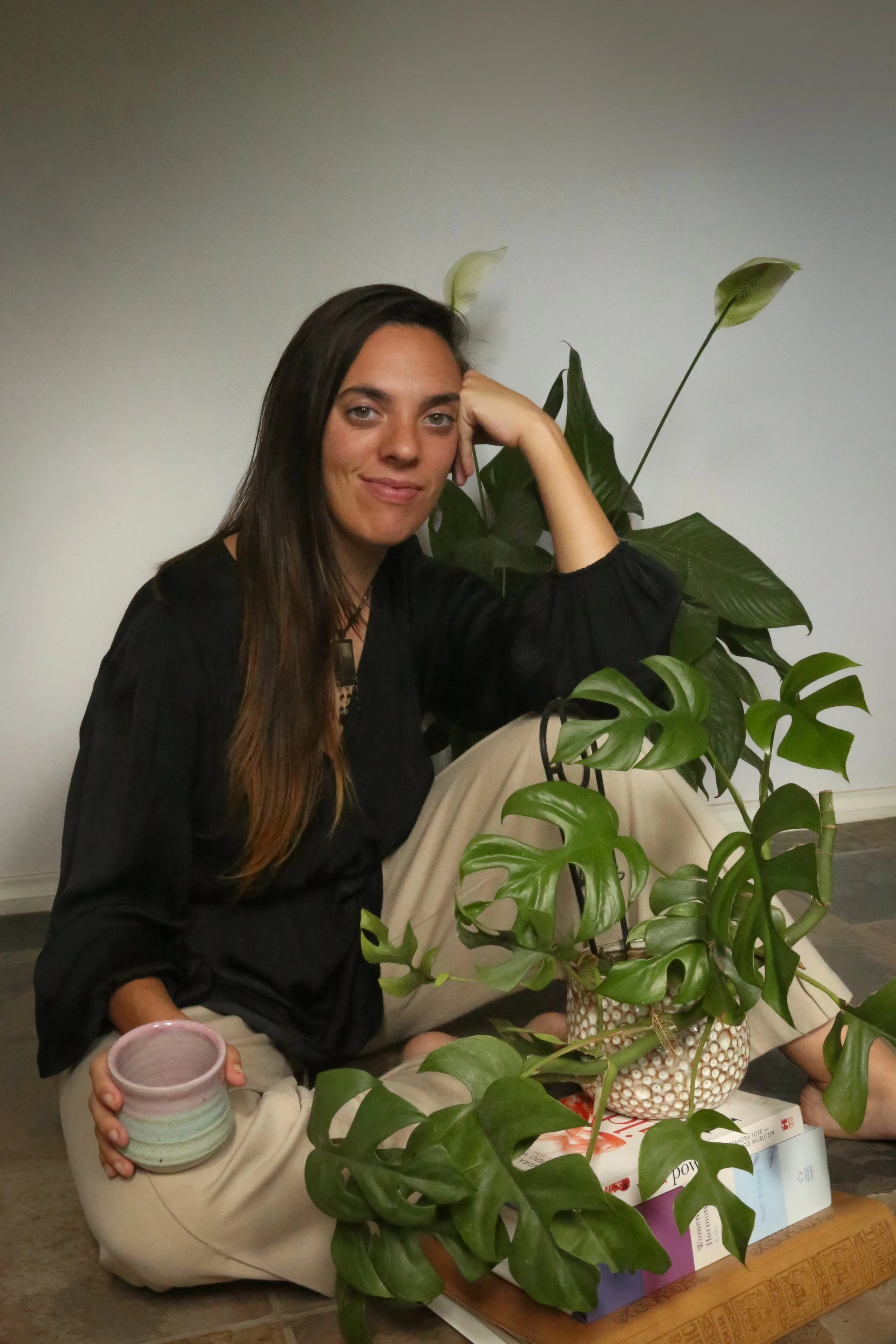
Karinda John is a Naturopath (BHSc) and Fertility Awareness Teacher specialising in women's hormonal health. She works with women who are tired of being told their symptoms are normal, helping them understand what their cycle is actually communicating and building the foundations for genuine hormonal balance through functional testing, personalised naturopathic medicine, and body literacy education. She runs the Harmonised Hormones program and is the creator of the free Cycle Tracking Guide.
*This blog post is for educational purposes and does not constitute personalised medical advice. If you have concerns about your health, please seek support from a qualified healthcare practitioner.*