PCOS Natural Treatment: A Naturopath's Guide to Understanding & Managing Polycystic Ovarian Syndrome
Up to 21% of reproductive-aged women will experience PCOS at some point between their first period and menopause. And yet, up to 70% remain undiagnosed.
That statistic alone tells us something important: PCOS is both far more common than most people realise, and far more frequently missed than it should be.
If you've been diagnosed with PCOS — or you suspect you might have it — this guide is for you.
I'm going to walk you through what PCOS actually is, why the "one-size-fits-all" approach to treatment so often falls short, the four distinct types of PCOS and what drives each one, and what a genuinely holistic, root-cause approach to managing PCOS naturally actually looks like.
Spoiler: it's not just "cut out sugar and take inositol."
What is PCOS, really?
PCOS stands for Polycystic Ovarian Syndrome. It's worth unpacking that name, because it causes a lot of confusion.
First, the "cysts" in polycystic aren't actually cysts. They're follicles — the same follicles your ovaries would normally contain. In PCOS, due to hormonal imbalances and a disruption to regular ovulation, these follicles can increase in number and appear larger on an ultrasound, giving a "cystic" presentation. But they are not cysts in the conventional sense, and the name is genuinely misleading.
Second, PCOS is a syndrome — meaning it's a collection of symptoms that tend to appear together, without one single, fully understood cause. The diagnostic criteria most commonly used were actually established in 2003, and the field has moved significantly since then.
There's also a real conversation to be had about over-diagnosis. Not every irregular cycle or elevated testosterone reading equals PCOS. And this matters, because a wrong or imprecise diagnosis can leave women confused, mistreated, and disconnected from what's actually happening in their body.
Here's what I always want my clients to understand: you don't need to fit perfectly into a PCOS box to deserve proper investigation and care.
What matters is understanding the hormonal patterns that are showing up in *your* body, and addressing the root of those.
The 4 Types of PCOS (and why your type matters for treatment)
This is where things get genuinely interesting — and where a lot of standard PCOS advice misses the mark entirely.
PCOS is not one condition with one cause. There are at least four distinct presentations, each with different underlying drivers. Knowing which type (or combination of types) applies to you is the difference between a treatment plan that works and one that doesn't.
1. Post-Pill PCOS
This is the pattern that emerges after stopping hormonal birth control, most commonly the oral contraceptive pill.
To be clear: the pill doesn't *cause* PCOS. What's more accurate is that the pill suppresses symptoms. If PCOS-like hormonal patterns were already present before starting contraception, those patterns get masked. When the pill is stopped, the suppression lifts — and the underlying hormonal imbalance becomes visible.
Symptoms that often appear after stopping the pill include acne, irregular or missing periods, cycles longer than 35 days, and excess hair growth on the chin, jaw, or elsewhere. These can be driven by a surge in testosterone and the slow recovery of full ovarian function as the body works out how to regulate itself again.
Think of hormonal contraception like a dam wall: it holds back your body's natural hormonal fluctuations. When you remove the dam, those waves come through — and the underlying current that was always there becomes apparent.
The good news: post-pill PCOS tends to be one of the more responsive types to natural treatment, because the hormonal disruption is relatively recent and the body is actively trying to recalibrate.
2. Adrenal & Androgenic PCOS
This type is driven by elevated adrenal hormones, including androgens like DHEA, androstenedione, and cortisol.
The adrenal glands sit above the kidneys and are responsible for your stress response. When the body experiences chronic stress — whether that's physical, emotional, or environmental — the adrenal glands work overtime. Over time, this chronic output dysregulates the entire stress hormone system, creating a ripple effect that reaches the reproductive hormones too.
Elevated cortisol suppresses progesterone. Elevated androgens from the adrenals can mimic the testosterone-driven symptoms of PCOS: acne, hair changes, irregular ovulation. And chronic stress drives inflammation, which further feeds the hormonal dysregulation.
Women with adrenal PCOS often present with strong nervous system reactivity, difficulty recovering from stressful periods, persistent fatigue, and a body that feels like it's constantly bracing for something. If this sounds familiar, it's worth exploring with a practitioner who can properly assess your adrenal function — not just order a standard cortisol blood test.
3. Insulin-Resistant PCOS
Insulin resistance is a factor in many types of PCOS, but in this presentation, it's the central driver.
Here's a simplified version of what happens: when you eat carbohydrates or sugar, your pancreas releases insulin to help transport that glucose into your cells for energy. When this system is exposed to repeated high-sugar intake, or meals that lack sufficient protein, fibre, and fat to slow the glucose load, cells can become less responsive to insulin's signal.
The result is that glucose stays in the bloodstream, your cells signal hunger (hello, cravings), and your body starts pulling on backup energy systems — including your adrenal glands. This drives up cortisol and adrenaline, which in turn increases androgens like testosterone, which suppresses ovulation, which increases follicle accumulation on the ovaries.
Insulin-resistant PCOS often presents with strong sugar cravings, energy crashes after meals, difficulty with weight, acne concentrated around the jawline, and irregular or absent periods.
The encouraging thing: blood sugar regulation responds really well to targeted dietary and nutritional strategies, and there are well-researched natural medicines that can meaningfully improve insulin sensitivity.
4. Inflammatory PCOS
Inflammation is a thread that runs through every type of PCOS — but in this presentation, it's the dominant driver.
Chronic low-grade inflammation disrupts hormonal signalling across the board. It impairs ovarian function, drives androgen production, worsens insulin resistance, and creates a systemic environment in which the body struggles to regulate itself.
Inflammatory PCOS can be triggered or sustained by gut dysfunction, dietary patterns high in processed foods, environmental toxin load, chronic stress, autoimmune activity, or a combination of factors. Symptoms can overlap significantly with other types, which is why a thorough investigation is so important.
"So how long will it take to manage my PCOS naturally?"
I wish I could give you a clean, specific answer. The honest one is: it depends.
How long you've had PCOS. Whether you've been on hormonal birth control recently. The severity of your hormonal imbalance. How readily you can apply new habits. How much nervous system and emotional regulation work is part of your picture. And how consistently you implement your treatment plan.
What I can tell you is this:
PCOS is not a life sentence.
I genuinely believe PCOS can be significantly improved — and in many cases, reversed — with a holistic approach. I don't agree with the blanket narrative that PCOS automatically means infertility, or that medication is the only management option. I've seen women move from long, irregular cycles to regular, ovulatory cycles within 3–6 months of consistent, targeted support.
What that requires is a proper investigation of *your* PCOS presentation — not a generic protocol.
What does a natural, holistic approach to PCOS actually involve?
This is where I want to be honest with you: "natural PCOS treatment" can mean a lot of things, and not all of it is grounded in the depth of clinical thinking that actually moves the needle.
Here's what a genuine, root-cause approach to PCOS looks like in my practice.
Starting with your foundations.
Before we layer in targeted treatments, we look at the systems your hormones depend on: your nutrition and blood sugar stability, how you're moving (and whether your exercise is working with or against your current hormonal picture), your circadian rhythm and sleep, and your nervous system regulation. These are not peripheral — they are the substrate that everything else builds on.
Investigating beyond standard blood tests.
Most women with PCOS have been told their bloods are "normal," or have only had basic hormone levels checked. In my practice, I use a more comprehensive investigative approach — looking at your full HPA axis (adrenal and stress hormones), your thyroid function, your metabolic and blood sugar picture, inflammatory markers, gut microbiome health, and where needed, functional hormone panels that track what your hormones are doing across your whole cycle — not just on one day.
Building a plan that's specific to your type and your life.
This includes herbal medicines tailored to your presentation (not a generic PCOS herb mix), nutritional supplementation that addresses your specific deficiencies and metabolic patterns, food strategies that support hormone metabolism and blood sugar regulation, and nervous system and lifestyle practices that are realistic for where you actually are.
Tracking your cycle as a clinical tool.
One of the most underused tools in PCOS management is cycle tracking. Understanding whether and when you're ovulating, how your cervical mucus and other cycle signs change across the month, and how your symptoms correlate with your hormonal phases gives us a layer of data that no blood test can replicate. I teach all of my PCOS clients how to track their cycle properly — and it often becomes one of the most empowering things they learn.
PCOS and the menstrual cycle: why cycle awareness changes everything
Women with PCOS are often told that their cycles are "too irregular to track." I would challenge that framing entirely.
Yes, irregular cycles make tracking more complex. But they make it *more* important, not less. Learning to identify the signs of approaching ovulation — even in a long or variable cycle — helps you understand what your body is doing, gives you real-time feedback on whether treatments are working, and reconnects you with the rhythms of your own body in a way that no app or external test can replicate.
If you're new to cycle tracking and want to start building this foundation, my free Cycle Tracking Guide is a great place to begin.
👉 Download the free Cycle Tracking Guide (or fill out your details at the bottom of this blog to get it straight to your inbox)
Is naturopathy right for your PCOS?
If you've been through the conventional medical system — come out with a diagnosis (or a non-diagnosis), been offered the pill or Metformin or a referral to a specialist — and you're still looking for something that actually addresses the *root* of what's happening in your body, then yes. A holistic naturopathic approach is worth exploring.
It's not a quick fix. Hormone healing takes time — typically a minimum of 3 menstrual cycles of consistent, targeted support before we see meaningful, lasting change. But the changes that come from addressing the root cause are durable in a way that symptom management never quite is.
If you'd like to explore what a personalised, root-cause approach to your PCOS could look like, you're welcome to:
👉 Take the free Hormone Pattern Quiz to get a starting picture of your hormonal pattern
👉 Book a free 15-minute connection call to chat about your PCOS and whether working together is the right fit
👉 Learn about Harmonised Hormones, my 3 or 6 month naturopathic program for women with hormone imbalance, PCOS, and menstrual cycle concerns
A note on diagnosis
I want to end with something important.
You don't need an official PCOS diagnosis to deserve proper investigation and care. And having a PCOS diagnosis doesn't mean your symptoms are identical to someone else's, or that the same treatment will work for both of you.
Diagnoses can be useful as a framework — but they can also be limiting, especially when they lead to generic treatment approaches that ignore the individual picture underneath.
In my practice, I'm always more interested in *your* body than in the label it's been given. What your symptoms are telling us. What your cycle is showing. What your stress, your history, your gut, your nervous system, and your hormones are communicating together.
That's where the real answers are.
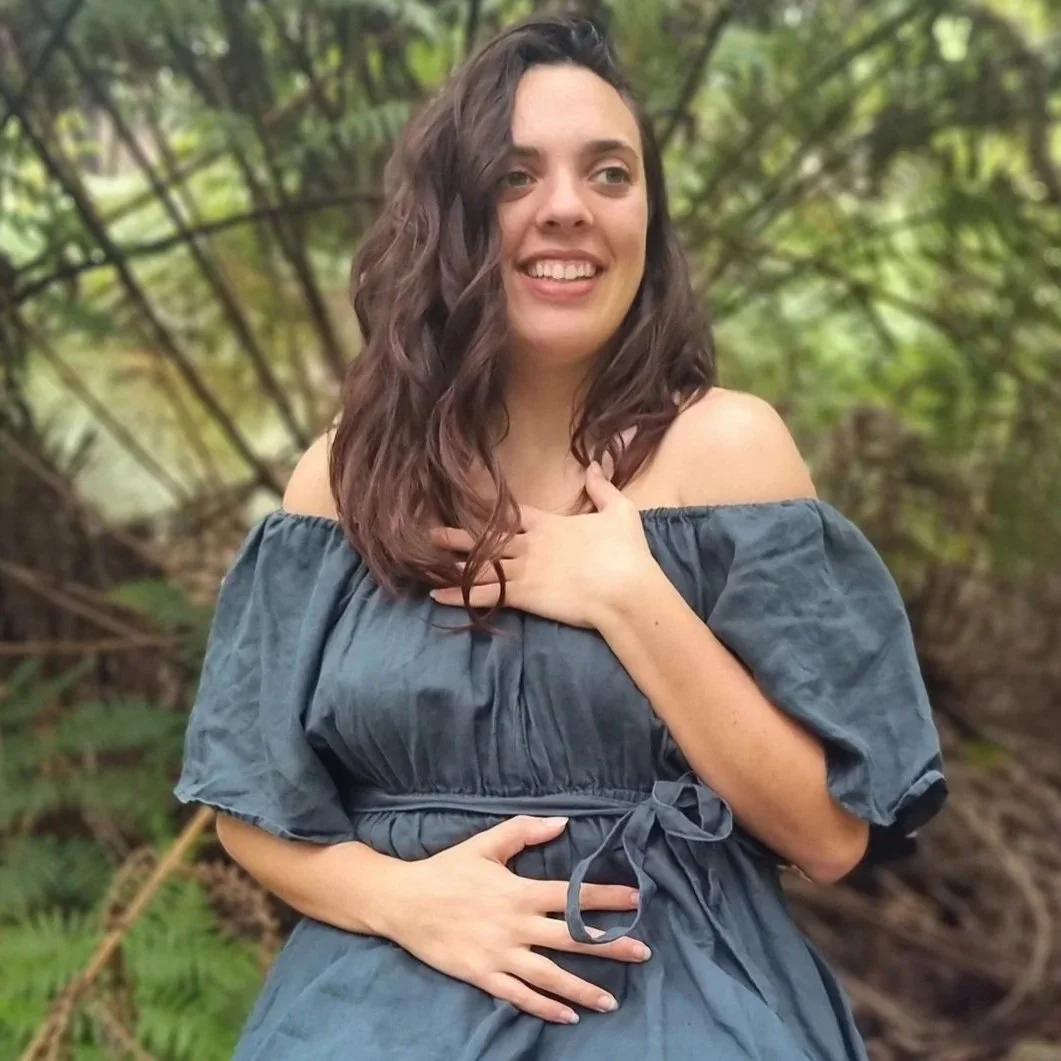
About the author: Karinda
Karinda is a Bachelor-degree qualified Naturopath, certified Fertility Awareness Educator, and menstrual cycle educator based in Melbourne (Naarm), working with women across Australia via online consultations.
She specialises in hormonal health, PCOS, endometriosis, PMS/PMDD, and menstrual cycle education.
*This blog post is for educational purposes and does not constitute personalised medical advice. If you have concerns about your health, please seek support from a qualified healthcare practitioner.*