Rethinking Period Pain: What Your Cramps Are Really Telling You
This post is adapted from Episode 14 of the Oh My Menses podcast. Listen to the full episode here.
I recorded this episode on day two of my cycle. Not ideal conditions for a podcast, but I got the call to do it. So here we are.
I have left work in the middle of a shift because of period pain.
Not once. Multiple times. I'd be in the middle of a busy retail floor and the cramps would hit — that specific kind of deep, relentless pelvic ache — and I'd have to find my manager and explain, red-faced, that I needed to go home.
And I would cry.
Not just from the pain, but from the shame of having my body interfere with my life. Of being *that girl* again.
I'd been that girl since high school. Forging notes in my best impression of my mum's handwriting so I wouldn't have to run cross country while bleeding. Sitting through classes hunched over, trying to look normal. Learning very early that my period was an inconvenience to be managed — preferably quietly, preferably without anyone noticing, preferably without slowing down.
Here's where I'm at now: day one and two of my cycle, I feel sensation. Sometimes intensity. But nothing that leads me reaching for the Nurofen, nothing that even leads me reaching for my natural anti-inflammatory supplements.
And what got me here wasn't primarily a supplement protocol or a diet overhaul — though those things matter, and I'll talk about them. It was a complete reframe of what period pain actually is.
So that's what this post is. Four things that shifted my relationship with my period, especially during the bleed. They're not all practical in the conventional sense. Some of them will feel unusual. All of them changed something for me.
First: is period pain normal?
Before the reframes — a quick clarification, because it's important.
Period pain is *common*. Up to 80% of women experience it at some point in their lives. But common and normal are not the same thing.
Mild discomfort or heaviness in the first day or two of your bleed? That's within the range of normal. Your uterus is contracting to shed its lining, prostaglandins are doing their thing, there's real physiological activity happening — some sensation makes sense.
Pain that stops you functioning — that has you cancelling plans, leaving work, relying on strong pain medication every cycle — that is your body communicating that something is off. It is not a tax you have to pay for having a uterus. It is not an inevitability. And it is not a character flaw or a sign that you're weak.
It's a message. And that's where we start.
Reframe 1: Pain as a message, not a malfunction
The first shift — and the one everything else builds on — is this:
Can you start to see your pain as a signal from your body, rather than something that must be stopped?
I know. I know how that sounds when you're in the fetal position at 2am with a heat pack velcroed to your abdomen. Bear with me.
Samantha Zipporah calls it restorying pain. The idea that we all carry a story about what pain means — what it says about us, about our health, about our future. And most of us have been handed a story that goes: “pain is bad, pain is the enemy, pain must be eliminated so we can get back to being functional.”
What if we tried a different story?
Pain is a symptom. Symptoms are messages. Your body does not produce symptoms for no reason — it produces them because something, somewhere, is asking for attention. That something might be in your diet. It might be in your lifestyle. It might be in how hard you've been pushing, how little you've been sleeping, how chronically stressed your nervous system has been for the past six months. It might be in your relationship to rest, or your relationship to yourself.
I'll offer you an idea I came up with while recording this episode, and I want to be clear it's just a thought to sit with rather than a clinical fact: what if the severity of period pain is proportional to the urgency of the message? A little pain: *hey, there are some things we could tweak here.* A lot of pain: *we need a full reset, and we needed it a while ago.*
I don't know if that's true. But I know that when I started approaching my cramps with curiosity rather than resistance — *what are you trying to tell me?* instead of *how do I make you stop?* — things started to change.
The mindset shift that helps enormously here is moving from "I've tried everything and nothing works" to "there are things in my life that could be different." The second position feels harder, because it means there's something left to look at. But it's also the position that actually opens a door. The first one closes it.
Reframe 2: Opening a dialogue with your womb
This is the part where I lose some of you, and that's okay. Come back when you're ready.
Your womb space — the uterus, cervix, ovaries, all of it — is not just anatomy. It is a profoundly dynamic, energetically rich part of your body. The uterus expands to many times its resting size in pregnancy. The cervix opens, closes, lifts, lowers. There is constant movement, constant signal, constant activity in this part of your body.
And if we believe that the body is wise — which I do, fully — then we have to extend that belief to include the womb.
So the invitation is this: open a dialogue. Acknowledge that there's a two-way conversation available to you, and your womb is on the other side of it trying to be heard.
If you're not sure where to start, try this: place one or both hands on your lower belly, just below your navel and above your pubic bone. And ask, out loud or in your head: *What do you need? What is the next right thing? What are you trying to show me?*
Then — and this is the important part — don't go looking for the answer in your brain. Don't run through a mental checklist of everything you've done wrong this week. The answer from your womb doesn't come that way. It tends to come as a spontaneous thought, a sudden knowing, an urge to move or be still or cry or drink more water or cancel something you didn't want to do anyway. It comes as instinct, not analysis.
It might feel ridiculous the first few times. Do it anyway. What have you got to lose by feeling a bit silly, if the payoff is a direct line to your body's own wisdom?
Here's a real example from my life. I work part-time in a physical role. There's a particular location I'm sometimes at — a funeral home, which I actually love for the symbolism, but I understand that's very me — and I noticed I kept arriving there right as my bleed was starting or on day two.
One afternoon I was cramping, bleeding heavier, and I was still an hour away from finishing. I stopped what I was doing, put my hand on my belly, and I talked to my womb out loud. I said: “we've got an hour. I'm going to go as slowly and calmly as I can. And when that hour is done, we're going home, we're getting blankets and herbal tea, you can freebleed, and you can exhale. I know what you need. We're nearly there.”
Within a few minutes, the cramping eased. I hadn't taken anything. I'd just made a promise and meant it.
Your body responds to being heard. It responds to knowing that you're on its side.
Reframe 3: "This too shall pass"
This one comes from my teenage years, which is where a lot of my best wisdom lives.
I had severe IBS growing up — really debilitating episodes that would leave me sweating, cramping, on the bathroom floor, moving my body into increasingly desperate configurations trying to find relief. At some point I came across Buddhist teachings, and somewhere in that I found this phrase: *this too shall pass.*
It sounds simple. It is simple. It's also enormously effective when you're in acute pain and your nervous system is in a panic spiral.
*This too shall pass* doesn't take the pain away. It doesn't promise anything. What it does is interrupt the story your brain wants to tell — that this is forever, that something is irreparably wrong, that you'll always feel like this. It reminds you that the experience is temporary. And that alone — just the reminder that this moment will end — is enough to drop the panic response a few notches. Enough to breathe. Enough to get through.
I've used this on my worst period days. Curled up, rocking, fully in it. And something in the repetition of that phrase creates just enough space between me and the experience that it becomes survivable in a different way.
Find your phrase. Embed it deeply. Let it be there when you need it.
Reframe 4: Pain is inevitable. Suffering is optional. You always have a choice.
This was on my social media profiles from age 16 onwards. I've earned the right to this quote.
The first reaction most people have is resistance.
“Suffering is optional? Tell that to someone in genuine distress. Tell that to people navigating war, illness, loss.”
And I hear that. The victim in all of us — and she's in all of us, in varying degrees — hears "suffering is optional" as accusation. As blame. As yet another version of *you're doing this to yourself.*
That's not what this means.
Pain is inevitable. Nobody handed you a guarantee when you arrived on earth that said: smooth ride, no hard times, pain-free existence, all good. That didn't happen. Acknowledging that — *no one promised me this would be easy* — is surprisingly relieving. It removes the sense that you've been cheated, that pain is a personal injustice, that your body is failing at something it was supposed to get right.
Pain is part of life. Okay. Now: what do you do with it?
That's where the choice lives.
I chose suffering for years with my period pain. Not deliberately, not consciously — but the choice was in what I did with the pain when it arrived. I chose to bypass it. I chose to push through. I chose to get on the peak-hour train and sit through the lecture and do the shift and come home exhausted and resentful and in more pain than I'd started with. I chose to put my body last, and then expected it to work beautifully for me.
The good-girl archetype was running that show. Do everything expected of you. Don't be inconvenient. Don't let your body have needs that interfere with other people's plans. Keep going. Be fine.
That's choosing suffering.
What I do differently now: when I have any kind of menstrual pain, I stop. I cancel things if I need to. I don't leave the house if my body doesn't want to. I go to my bed or my couch, heat packs on my neck and belly, blankets, water, herbal tea, Laika settled, and I close my eyes and I go *into* the experience rather than away from it.
And something unexpected happens when you stop running from the pain and start sitting with it.
You lean in. You get quiet. You receive things. I have had some of my most potent, clear, creatively alive experiences during my bleed — during the part of my cycle I used to dread most — because I started treating it as a portal rather than an inconvenience.
Sometimes I have dreams that feel significant. Sometimes I get clarity on something that's been murky. Sometimes it's just a really excellent nap. The point is: my body just wanted to slow down. And when I finally let it, it stopped having to scream quite so loud to make that happen.
The clinical piece of the period pain puzzle — because it matters too
I want to be clear: everything above is about relationship, mindset, and the way we meet our experience. It is not a substitute for addressing what's driving period pain at a physical level.
Because something is driving it.
Period pain — beyond mild cyclical discomfort — is usually underpinned by inflammation. High prostaglandin production. Oestrogen dominance. Nutritional deficiencies (magnesium, zinc, omega-3s do a lot of work here). Blood sugar dysregulation. Elevated cortisol affecting cycle dynamics. In some cases, endometriosis or adenomyosis — conditions that warrant proper investigation and that naturopathy can support but cannot diagnose.
The reframes in this post make the pain more navigable. They may even reduce it — the mind-body connection is real and researched, and nervous system state absolutely influences pain experience. But the underlying physiology still needs addressing if you want to get to a place where your bleeds feel genuinely manageable rather than just philosophically bearable.
That's the work I do with clients. We look at the root. We test where it's useful to test. We support the specific drivers — not with a cookie-cutter period pain protocol, but with a treatment plan built around what your body is actually doing.
Where to start?
If period pain is something you're navigating right now:
👉 Download the free Cycle Tracking Guide — start understanding your cycle beyond just the bleed. What's happening in the weeks before your period is often the most important part of the period pain picture.
👉 Take the free Hormone Pattern Quiz get a starting sense of what hormonal pattern might be behind your symptoms.
👉 Book a free 15-minute connection call if you're ready to actually get to the root of what's happening, this is where we start.
👉 Learn about Harmonised Hormones, my 3 or 6-month naturopathic program for women with painful, irregular, or difficult cycles.
And to close: I wish you a bleed that feels, at minimum, survivable. And ideally, one day, something better than that. Delicious, even.
Lots of love from my womb to yours.
This post is adapted from Episode 14 of the Oh My Menses podcast. Listen to the full episode here.
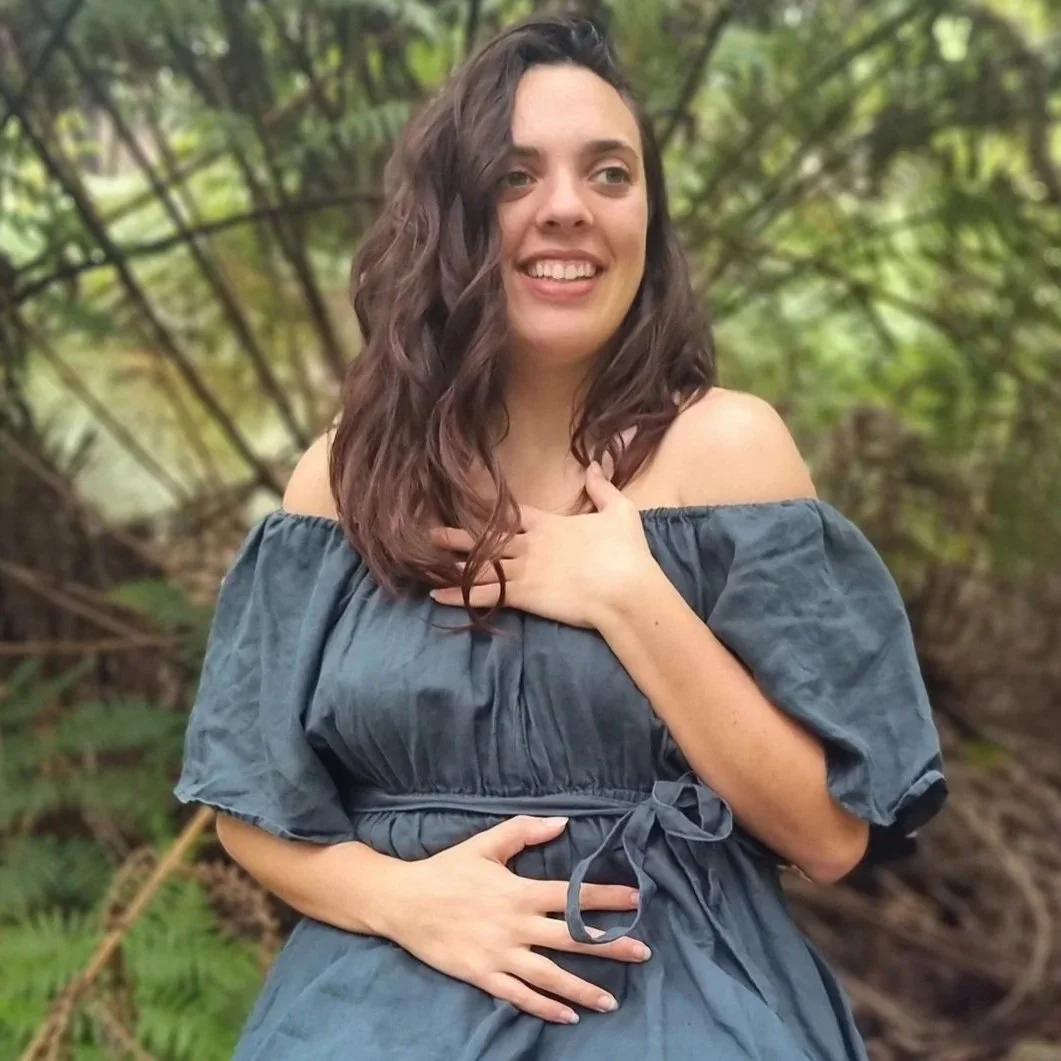
About the author: Karinda
Karinda is a Bachelor-degree qualified Naturopath, certified Fertility Awareness Educator, and menstrual cycle educator based in Melbourne (Naarm), working with women across Australia via online consultations.
She specialises in hormonal health, PCOS, endometriosis, PMS/PMDD, and menstrual cycle education.
*This blog post is for educational purposes and does not constitute personalised medical advice. If you have concerns about your health, please seek support from a qualified healthcare practitioner.*